Narrow Aisle Forklift Safety: How Flagman Controls Order Picker and Reach Truck Blind Spots
Narrow aisle forklift safety for NSW warehouses: how order pickers, reach trucks and pedestrians can be protected with separation and Flagman pedestrian detection.
In brief
- Narrow aisles put order pickers, reach trucks and people on foot within a few metres of each other, with racking that hides both the pedestrian and the truck until the last moment.
- NSW law requires powered mobile plant that could collide with people to be controlled, including a warning device for people at risk, with plant maintained by a competent person.
- Flagman pedestrian detection watches aisle ends, intersections and the zone around the truck, alerts the operator and the person on foot, and can send a slow or stop signal where the truck’s controls allow.
- The outcome is earlier warnings in the aisle, recorded near misses that are usually never reported, and evidence that your traffic management plan works in practice.
It is the second week of peak season at a distribution centre in western Sydney. A reach truck operator is putting away pallets in a narrow aisle. At the far end, a picker on foot steps out from behind an upright to check a location label. Neither can see the other. The operator is looking up at the forks, five metres above the floor.
Most days, someone hears or sees in time. Narrow aisle forklift safety cannot rely on most days. This article sets out the risk, what NSW law expects, why existing controls leave a gap, and where Flagman AI detection can help.
The problem: tight aisles, high loads and people on foot
In October 2025, the NSW Government reported more than 600 forklift incidents notified to SafeWork NSW since January 2024. Four were fatal. Two thirds were dangerous incidents with no injury but real potential for harm, and 70 per cent occurred in manufacturing, postal, transport and warehousing. Incident types included collisions, rollovers and objects falling from forklifts.
Separation is where many sites fall short. In SafeWork NSW’s 2021 to 2022 forklift inspections in metropolitan Sydney, 21 per cent of inspected businesses were not adequately separating forklifts from pedestrians. Pedestrian separation was the main reason for non-compliance in wholesale businesses. SafeWork NSW notes that people are most at risk when walking beside a forklift or collecting stock from nearby shelving, which describes much of the work in a picking aisle.
The consequences reach the courts. On 29 October 2025, JBS Australia was convicted and fined $330,000 in the NSW District Court after a 56-year-old worker suffered a serious leg injury when he was struck by a forklift in a palletising area in July 2022.
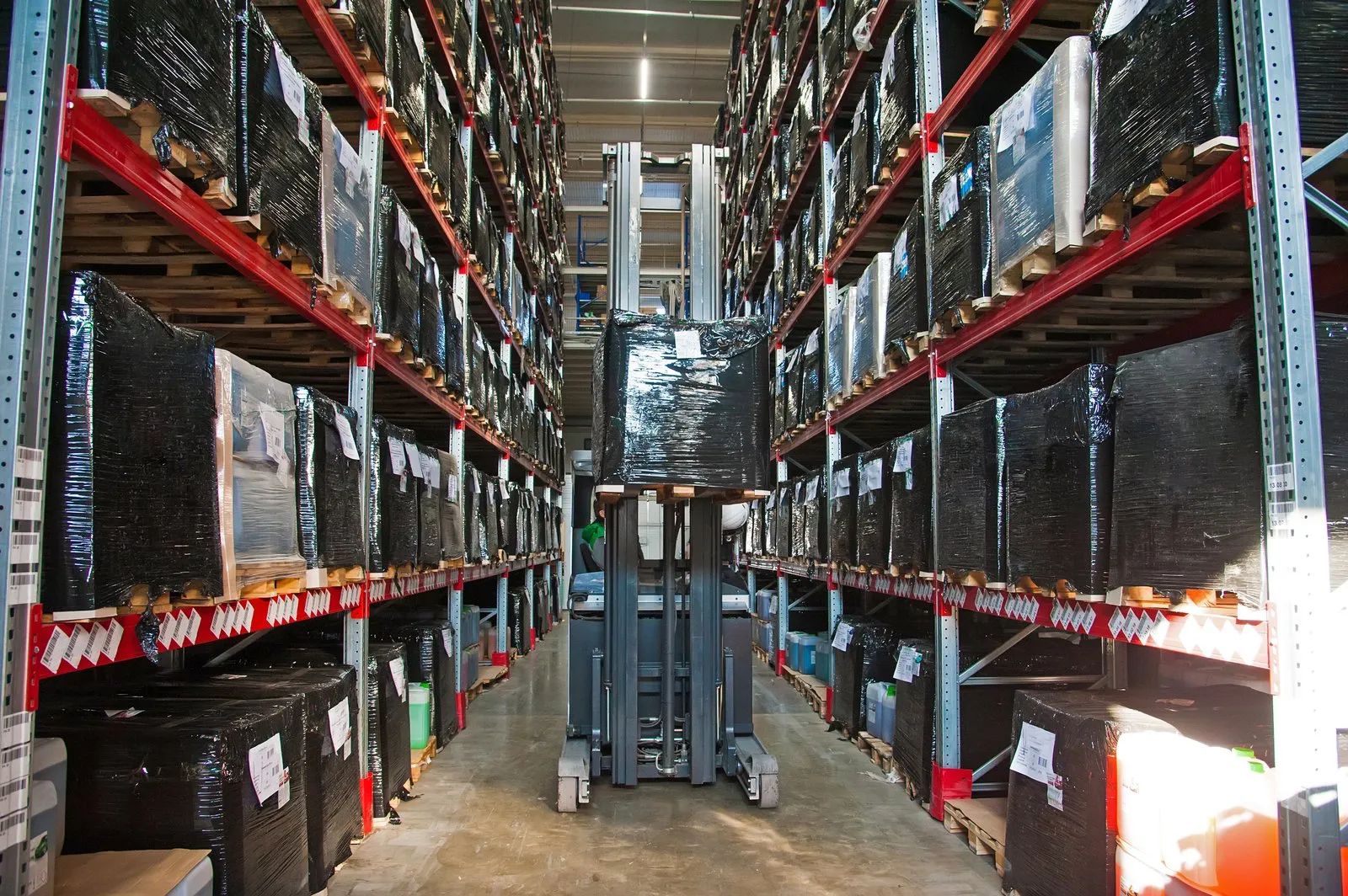
Narrow aisle trucks add specific blind spots. A reach truck operator often travels with the load leading or looks up during put-away. An order picker operator rises with the platform, so the floor around the base of the truck is out of view. Racking, stacked stock and pallet overhang hide people at every aisle end.
The requirement: what NSW law expects
Under the Work Health and Safety Regulation 2025 (NSW) and the SafeWork NSW Code of Practice: Managing the risks of plant in the workplace, the person in control of powered mobile plant must manage the risk of the plant colliding with any person or thing. Where a collision with people is possible, the plant must have a warning device that warns people at risk from its movement.
Regulation 213 requires maintenance, inspection and, where necessary, testing of plant by a competent person, following the manufacturer’s recommendations. The code also says warning devices must be regularly inspected and tested.
Licensing is separate for these trucks. In NSW, a forklift truck licence (LF) does not cover order-picking forklift trucks. Operators of order pickers, where the controls rise with the platform, need an order-picking forklift truck licence (LO).
Guidance points the same way. SafeWork NSW recommends dome mirrors at intersections and blind corners, clearly marked walkways, and proximity devices and speed limiting that slow forklifts to walking pace near people. In Victoria, WorkSafe’s forklift selection guidance asks whether aisles are wide enough and whether pedestrian detection should be specified when buying or hiring a truck.
Why existing controls leave a gap
- Exclusion rules depend on people. A rule that pickers stay out of an aisle while a reach truck is working is only as strong as the busiest shift.
- Mirrors and alarms fade into the background. In a building full of reversing beepers, one more alarm is easy to ignore.
- Aisle ends are blind by design. Racking that runs to the cross aisle hides anyone stepping out.
- Peak season changes the workforce. New and labour hire staff do not yet know which aisles are truck only.
- Near misses go unrecorded. A close call in aisle 14 at 3 am rarely reaches the safety team.
The solution: how Flagman supports narrow aisle forklift safety
Flagman uses computer vision to detect people and vehicles. In narrow aisle operations, sites can configure:
- Forklift pedestrian detection zones. In its forklift setup, Flagman gives a warning at about 2.5 metres and a critical alert at about 1.5 metres, so the operator is warned before a person is directly in the path.
- Aisle end and intersection monitoring. Cameras at aisle ends can alert when a person and a truck are converging at a cross aisle, and can drive warning lights for the person on foot.
- Pedestrian exclusion zones. Truck-only aisles or put-away areas can be set as restricted zones, with an alert when a person enters while a truck is working.
- Slow or stop signals. Relay outputs can send a slow or stop signal only where the truck’s controls accept an external signal, which is mainly on electric trucks. This is an added layer, not a certified safety function.
- Edge processing and event records. Video is analysed on site without needing the cloud or internet, using compatible ONVIF IP, USB or GMSL cameras. Each event is logged with time-stamped video on a central dashboard.
Our article on warehouse traffic management and forklift pedestrian separation covers the layout and separation controls that should come first.
Limitations: what Flagman cannot do
- Flagman does not replace physical separation, aisle access control, speed limits or a traffic management plan. It strengthens them.
- It has no published Safety Integrity Level or Performance Level rating and is not a certified safety function. Automatic slowing depends on the truck accepting an external signal.
- Uprights, stock and pallet overhang can block camera views. Every aisle layout needs its own camera assessment and alert tuning, or operators will start to ignore alerts.
- Flagman does not manage fall from height risk for order picker operators, check racking loads or verify licences.
- Camera monitoring of workers requires consultation and, in NSW, written notice under the Workplace Surveillance Act 2005.
Predictive maintenance: truck condition is part of the hazard
In the same SafeWork NSW inspections, 12 per cent of inspected businesses were not keeping forklifts in a safe condition. In a narrow aisle, a worn brake, slow steering response, a failing horn or a dead warning light shortens the margin between a near miss and an injury.
Predictive maintenance uses hour meters, fault codes, impact records and inspection results to service trucks before they fail. Flagman events add a safety view: which trucks and aisles produce the most close calls, and whether that changes after a service or repair. Sharktech Global builds Business Intelligence dashboards that bring maintenance, downtime and safety data together, including Flagman events, so warehouse, fleet and safety managers work from one picture.
A practical plan for narrow aisle operations
- Map every narrow aisle. Record truck types, aisle widths, blind ends, cross aisles and where pickers walk.
- Separate first. Use truck-only aisles, barriers at aisle ends and scheduling so trucks and pickers do not share an aisle at the same time.
- Check licences and maintenance. Confirm LO licences for order picker operators and inspect warning devices on every truck.
- Consult and notify. Involve workers and health and safety representatives, and give 14 days’ written notice before camera monitoring starts.
- Pilot Flagman in the busiest zone. Start with the aisles that carry the most put-away and picking traffic, then tune zones with operators.
- Review weekly. Use event video in toolbox talks and feed repeat locations into layout changes. Our guide to pallet racking safety and forklift impact covers the racking side of the same aisles.
Flagman in Australia: local delivery by Sharktech Global
Sharktech Global, based in Liverpool, New South Wales, is the exclusive Australian and New Zealand delivery partner for Perleybrook Labs, the designer and manufacturer of Flagman. Sharktech Global assesses sites, installs and integrates Flagman with warehouse systems and trucks, and provides local business-hours support. Learn more about its technology services for warehouses and distribution centres.
The outcome you can measure
- Alerts at the point of risk when a person and a truck converge in an aisle or at an aisle end.
- Near misses recorded automatically instead of relying on self-reporting.
- A baseline of close calls per aisle, truck and shift, so you can compare before and after layout, scheduling or maintenance changes.
- Time-stamped evidence for boards, health and safety committees and SafeWork NSW that your traffic management plan works.
Key takeaways
- Narrow aisle forklift safety starts with separation, licensing, warning devices and a traffic management plan.
- The gap is the blind aisle end and the shared aisle that rules alone cannot control.
- Flagman adds forklift pedestrian detection, exclusion zone alerts, optional slow or stop signals where trucks allow, and a record of every close call.
- Well maintained trucks keep the safety margin your plan depends on.
Next step
Request a Flagman safety assessment or call Sharktech Global on 0468 017 373 to review your narrow aisles, order pickers and reach trucks.
Sources: NSW Government, forklift safety compliance blitz (10 October 2025); SafeWork NSW, NSW forklift safety report (February 2023); SafeWork NSW, prosecutions October 2025; SafeWork NSW, company fined $330,000 after worker hit by forklift; SafeWork NSW, Code of Practice: Managing the risks of plant in the workplace; SafeWork NSW, Forklift safety guide for employers; SafeWork NSW, High risk work licences; WorkSafe Victoria, Forklift selection and planning. This article is general information only and is not legal or engineering advice. Seek advice for your site and jurisdiction.