Working Under Raised Trailers and Heavy Components: How Flagman Detects People in the Drop Zone in NSW Workshops
Working under raised loads in NSW trailer and fabrication workshops: what the $225,000 axle case shows, the controls required, and how Flagman restricted zone detection helps.
In brief
- Working under raised trailers, chassis and heavy components is routine in NSW fabrication and trailer workshops, and a single failed support can cause crush injuries in a second.
- In November 2026 SafeWork NSW announced that a trailer company was convicted and fined $225,000 after a 350 kg axle fell on a worker who was underneath a trailer.
- The core controls are physical: rated jacks or hoists, secondary supports such as axle stands, chocks, level ground and an exclusion zone. Flagman AI vision adds restricted zone detection that alerts when a person enters the drop zone under a raised load.
- The outcome is earlier warnings, a time-stamped record of every entry under a raised load, and data supervisors can use to check whether the safe system of work is actually followed.
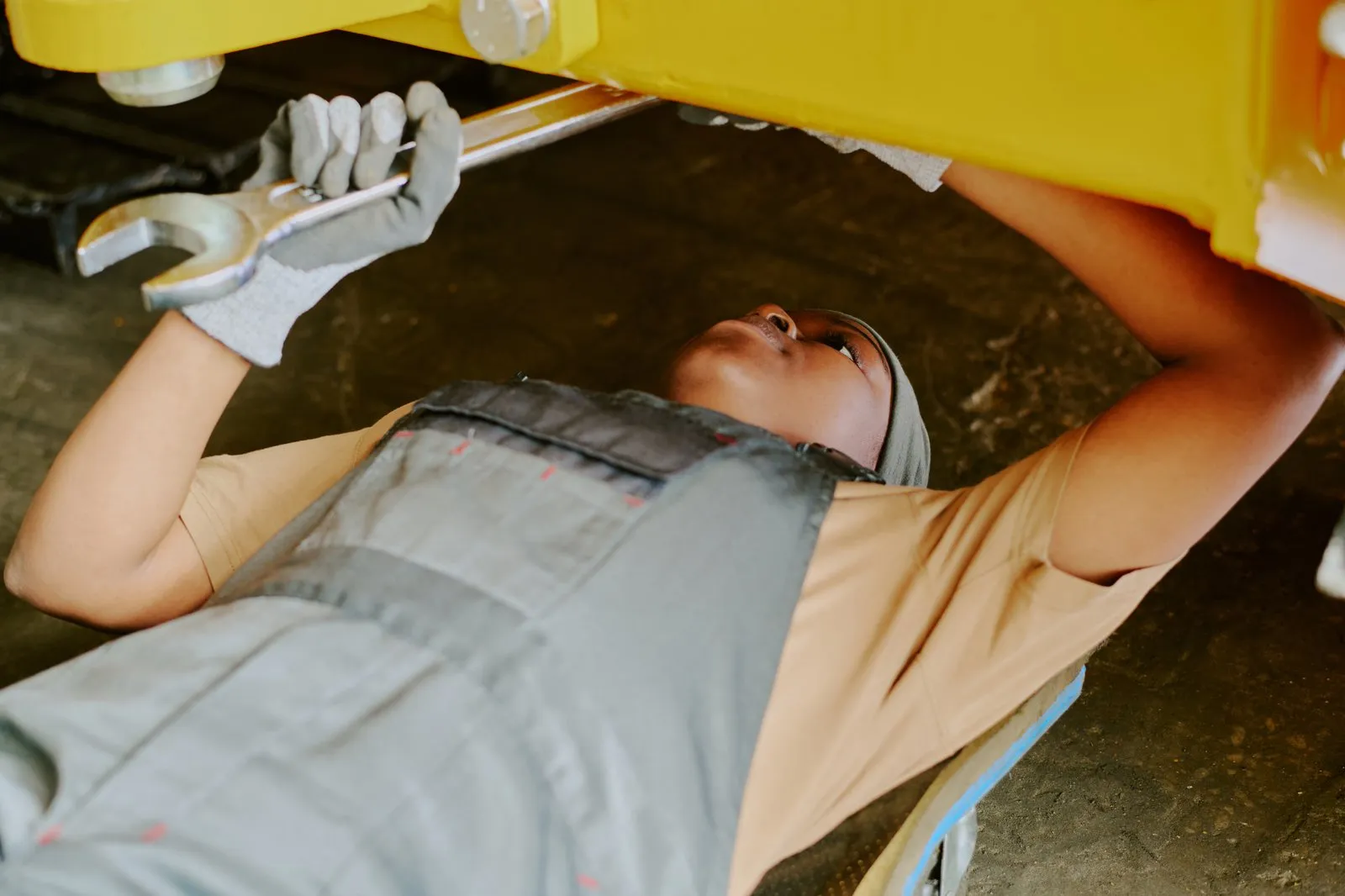
A trailer sits on jacks in the back bay. The axle is being swapped, the shift is running late, and the stands are on the other side of the workshop. Someone slides underneath “just for a second” to line up a bolt. Most of the time nothing happens. The day something shifts, there is no second chance.
Managers in trailer building, truck body fabrication and heavy equipment manufacturing know this scene. The controls exist. They depend on people doing every step, every time, under time pressure.
The problem: crush injuries under raised loads
On 2 November 2026, SafeWork NSW reported that AAA Trailers Pty Ltd was convicted and fined $225,000 in the Industrial Court of NSW. The case arose from an incident on 7 September 2023, when a worker suffered serious injuries after a 350 kg axle fell on him while he was working underneath a trailer. The company pleaded guilty to failing to comply with its primary duty of care to workers under section 19(1) of the Work Health and Safety Act 2011.
SafeWork NSW’s safety alert on heavy vehicles or trailers hitting or crushing workers notes that workers frequently need to work on or under a heavy vehicle or trailer to clean it, check faults, or carry out servicing and repairs. Its listed contributing factors include workers under a vehicle or in its path, unsafe systems of work, wheels not chocked, and components not restrained or adequately supported.
The national picture shows why manufacturers should care. Safe Work Australia’s Key Work Health and Safety Statistics 2025 report 14,800 serious claims in manufacturing in 2023 to 2024, a frequency of 9.4 serious claims per million hours worked, and 7 manufacturing worker fatalities in 2024.
The requirement: what NSW expects
Under the Work Health and Safety Act 2011 (NSW), a person conducting a business or undertaking must ensure, so far as is reasonably practicable, the health and safety of workers.
The SafeWork NSW safety alert sets out practical expectations for anyone working under a heavy vehicle or trailer that could move or drop:
- never work underneath or near a vehicle without a secondary support or safety system in place, such as axle or jack stands and wheel chocks
- use a suitable jack or vehicle hoist installed to the manufacturer’s specifications
- place stands on a hard, level surface under suitable support points, and chock any wheels left on the ground
- identify hazards before work starts and, where appropriate, establish an exclusion zone
The SafeWork NSW Code of Practice, Managing the risks of plant in the workplace (2022), adds that plant should usually be isolated before maintenance or cleaning, with lockout as the most effective isolation procedure. From 1 July 2026, NSW duty holders must comply with approved codes of practice, so the code is no longer simply guidance to consider.
Why existing controls leave a gap
Stands, chocks and hoists are the right controls. The gap is in how they are used on a busy floor:
- Shortcuts are invisible. A supervisor cannot watch every bay. Brief entries under a load on jacks alone usually go unseen and unreported.
- Exclusion zones are painted, not enforced. Floor markings depend on people noticing them, including visitors and new starters.
- Near misses vanish. If a jack creeps or a component shifts and nobody is hurt, there is rarely a record. The organisation learns nothing until someone is injured.
The solution: how Flagman detects people in the drop zone
Flagman is AI detection and early warning that strengthens the physical controls above. It does not replace them. In a fabrication or trailer workshop it can be set up as follows.
Restricted zone detection under raised loads. Cameras overlooking each service or assembly bay are configured with a no-go zone around the footprint of a raised trailer, chassis or component. When a person enters that zone, Flagman raises an alert at the point of risk, such as a beacon or siren in the bay, and notifies the supervisor.
Signals to hoists and lifting equipment. Through relay outputs or PLC integration over Modbus and PROFINET, Flagman can send a slow or stop signal where the machine’s controls allow, for example to hold a hoist from moving while a person is detected in the zone. This is an added layer, not a certified safety function.
Evidence for supervisors. Every entry into a restricted zone is logged with time-stamped video on a central dashboard. Supervisors can review events to check whether stands were in place and fix the system of work rather than blame individuals.
Flagman processes video at the edge, on site, without needing a cloud connection, and works with ONVIF IP, USB and GMSL cameras, so many workshops can start with cameras they already have. Our post on lockout tagout and machine danger zones in NSW manufacturing explains how the same zone approach supports isolation discipline.
Predictive maintenance: the condition of the equipment holding the load
Many drop incidents start with equipment, not behaviour. A trolley jack with worn hydraulic seals, a hoist with a sticking mechanical lock, a stand with a bent pin or cracked base, or a damaged lifting point on a fixture can all fail under load.
A predictive maintenance approach ties equipment condition to the hazard. That means recording inspections of jacks, stands, hoists and props, tracking defects and repairs. Patterns matter, such as a bay that logs more restricted zone entries when a stand is out of service. Sharktech Global builds Business Intelligence dashboards that bring maintenance, downtime and safety data together, including Flagman events, so managers can see equipment condition and safety behaviour in one place. Flagman itself does not inspect jacks or stands; the value comes from linking its event data to your maintenance records.
Limitations: what Flagman cannot do
- It does not hold up a load. Only rated jacks, hoists, stands and props do that. Flagman must never be used as a reason to skip secondary supports.
- It cannot confirm a stand is correctly rated or placed. It detects people in zones. Checking support points remains a human task, which recorded video can help supervisors review.
- Line of sight matters. A camera cannot see a person it cannot see. The space under a chassis can be partly hidden, so camera position, angle and lighting must be tested during setup.
- No certified safety rating. Flagman has no published SIL or Performance Level rating and is not a lockout or isolation device or a certified presence sensing safeguard.
- Workplace surveillance law applies. In NSW, the Workplace Surveillance Act 2005 requires written notice to workers at least 14 days before camera surveillance starts, along with visible cameras and signs. Consult workers and health and safety representatives before go-live.
A practical plan for your workshop
- Map the bays. List every location where people work under raised trailers, chassis or components, and the lifting equipment used at each.
- Fix the physical controls first. Confirm rated stands, chocks and props are available at every bay, the floor is level, and hoists are installed and maintained to the manufacturer’s specifications.
- Write the safe system of work and consult. Make “no stands, no entry” explicit, involve health and safety representatives, and give the required surveillance notice.
- Trial Flagman on two or three bays. Set restricted zones, tune alerts with the crew to avoid nuisance alarms, and decide which alerts go to the supervisor.
- Connect the data. Bring Flagman events together with maintenance and downtime records, then review weekly.
If heavy components are moved by forklift on sloping ground, our guide to forklift roll-away and parking on slopes covers the related immobilisation risks.
The outcome you can measure
- Alerts at the point of risk whenever a person enters the drop zone under a raised load.
- A time-stamped record of restricted zone entries, by bay and by shift, compared against your pre-trial baseline.
- Near misses captured as data rather than lost, giving leading indicators for toolbox talks and management reviews.
- Evidence for boards and regulators that the safe system of work is monitored, not simply written down.
Flagman in Australia: local delivery by Sharktech Global
Sharktech Global, based in Liverpool, New South Wales, is the exclusive Australian and New Zealand delivery partner for Perleybrook Labs, which designs and manufactures Flagman. Sharktech Global assesses sites, installs and integrates Flagman with existing cameras and plant controls, and provides local support during business hours. Learn more about Sharktech Global’s services for manufacturers.
Key takeaways
- A $225,000 NSW conviction shows that crush injuries under raised trailers are treated as a primary duty failure.
- Secondary supports, chocks, level ground and exclusion zones remain the core controls.
- Flagman adds restricted zone detection, alerts and event records that make shortcuts visible.
Next step
Request a Flagman safety assessment or call Sharktech Global on 0468 017 373.
Sources: SafeWork NSW, Trailer company fined $225,000 after worker injured by falling trailer axle; SafeWork NSW, Heavy vehicles or trailers hitting or crushing workers safety alert; SafeWork NSW, Code of Practice: Managing the risks of plant in the workplace (2022); Safe Work Australia, Key Work Health and Safety Statistics Australia 2025. This article is general information only and is not legal advice.