Forklift Roll Away on Gentle Slopes: How Flagman Watches the Roll Path and Proves Parking Controls Work
Forklift roll away incidents have killed NSW workers on gentle slopes. See what SafeWork NSW expects for parking and park brakes, and where Flagman AI detection helps.
In brief
- Parked forklifts and trucks can roll away on slopes, and the person most at risk is often the operator who just stepped off and is working downhill of the machine.
- SafeWork NSW expects safe parking procedures, dedicated level parking locations in the traffic management plan, maintained park brakes and pedestrian separation. Since 1 July 2026 the NSW plant code is the minimum standard.
- Level parking, chocks, interlocked or fail-safe brakes and maintenance come first. Flagman AI detection can watch the roll path below ramps and driveways and flag plant left in no-parking zones.
- The outcome to aim for: fewer people standing in the roll path, plant parked where it cannot move, and a record that proves it.
A forklift operator parks at the top of a driveway with a gentle slope and walks down to check some boxes. The slope does not look steep. A few moments later the forklift begins to move. On 25 July 2025, a 26-year-old operator in New South Wales was struck and fatally injured in exactly this way.
Roll-away incidents happen when ordinary parking habits meet a slope, a tired brake or a rushed task, in factories, warehouses, transport yards and loading docks.
The problem: forklift roll away and uncontrolled vehicle movement
Vehicles are involved in most work deaths in Australia. Safe Work Australia reports 188 worker fatalities in 2024, and at least one vehicle was involved in 66% of them. Some of those deaths involve machines that move with nobody at the controls.
SafeWork NSW has published several roll-away incidents. In January 2020, a 51-year-old man was crushed by his truck at Marsden Park when it rolled down a slope while he was fitting a dog trailer. SafeWork NSW noted it was the second serious truck roll-away in New South Wales in seven months. The July 2025 forklift fatality shows the same pattern inside an industrial site: a parked machine, a slope that seemed minor, and a worker standing downhill.
The requirement: what SafeWork NSW expects
Following the 2025 forklift fatality, SafeWork NSW stated that businesses must:
- develop safe systems of work for operating and parking forklifts in line with the manufacturer’s recommendations, with particular attention to sloped surfaces;
- include dedicated parking locations in the traffic management plan so forklifts are not parked on inclines where uncontrolled movement may occur;
- separate pedestrians from moving forklifts with barriers or guard rails where practicable;
- inspect and maintain forklifts to the manufacturer’s specifications so that brakes and parking brakes work.
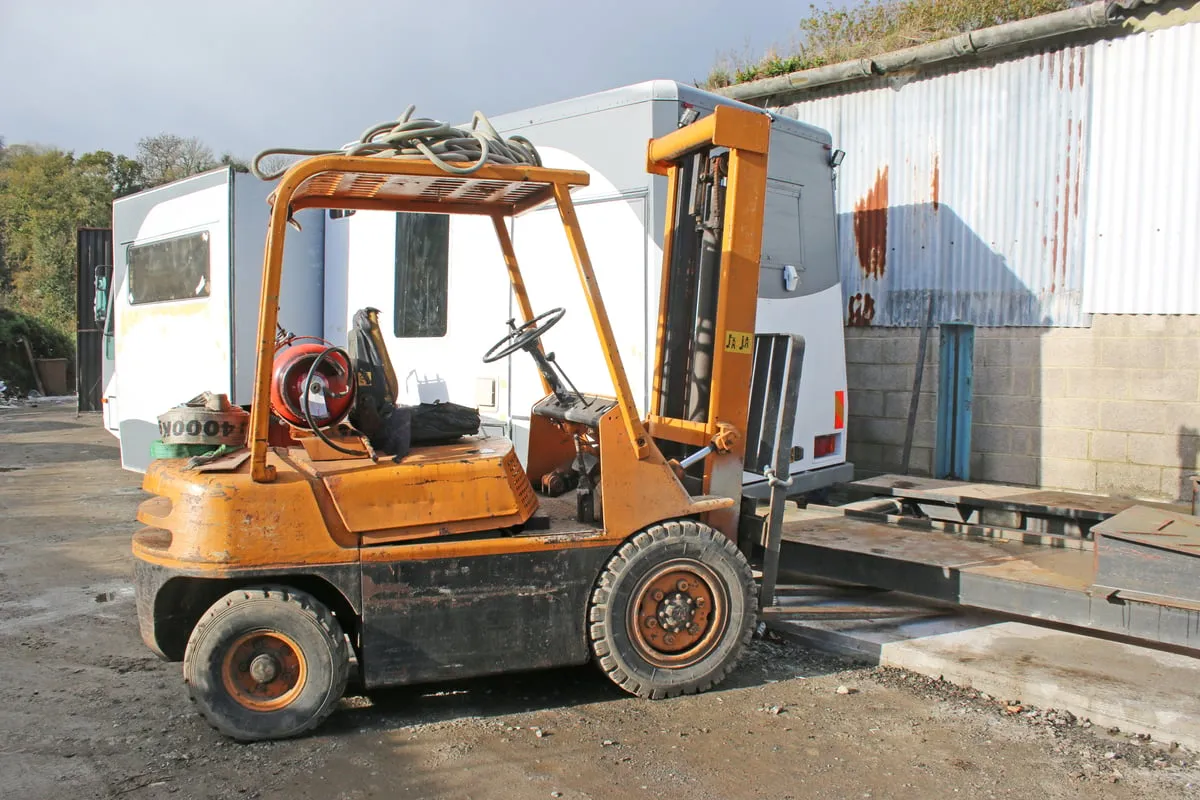
For unattended forklifts, the guidance is specific: park on level ground where practical, apply the park brake, set controls to neutral, lower the forks, turn the forklift off and remove the key. Where parking on an incline cannot be avoided, chock the wheels or park so the forklift cannot roll. For trucks and other vehicles, SafeWork NSW also asks businesses to consider seat-sensor interlocked brakes or fail-safe braking systems, and to use alarms or procedures where engineering controls are not possible.
These expectations now carry more weight. With the commencement of section 26A of the Work Health and Safety Act 2011 (NSW) on 1 July 2026, approved codes of practice became minimum performance standards. A business must comply with the Code of Practice: Managing the risks of plant in the workplace, or manage the risk in a way that is equivalent or higher. Our article on NSW codes of practice becoming mandatory under section 26A explains how to run that gap analysis.
Why existing controls leave a gap
Most sites have a parking rule. The gap is between the rule and what happens at 3 pm when a truck is waiting.
- Gentle slopes look safe. Driveways, dock approaches and yard grades are often not marked as no-parking areas because they do not look steep.
- Short stops skip the procedure. Operators who step off “for a second” may not lower the forks, turn off the machine or chock the wheels.
- Brake condition is invisible. A park brake that holds on flat ground may not hold on a grade, and a pre-start check on flat ground may not reveal it.
- People stand in the roll path. The area downhill of parked plant is rarely treated as a hazard zone, so nobody notices when workers gather there.
- Near misses go unseen. A forklift that creeps a metre and stops is rarely reported.
The solution: how Flagman supports roll-away prevention
Flagman uses AI vision on site cameras to detect people and vehicles and to raise alerts at the point of risk. It cannot stop a machine rolling with nobody in it. Its value is in watching where roll-aways turn into injuries, and showing whether parking rules are followed.
Roll path detection zones. A detection zone can be drawn over the area below a ramp, driveway or dock approach where plant is parked or travels. When a person enters that zone, Flagman can trigger a local light or sounder and notify a supervisor.
No-parking zone monitoring. Flagman detects vehicles as well as people. A zone can be set over a slope where the traffic management plan bans parking, so a forklift or vehicle left standing there can be flagged to the supervisor for follow-up. The exact rules should be confirmed for each site during assessment.
Forklift and pedestrian proximity. When plant is moving with an operator, the standard Flagman forklift setup raises a warning at about 2.5 metres and a critical alert at about 1.5 metres. Where the forklift’s controls accept an external signal, mainly on electric forklifts, Flagman can send a slow or stop signal. Our guide to loading dock safety for forklifts, trucks and pedestrians covers the dock controls that sit alongside this.
Evidence for review. Processing happens on site at the edge, without cloud or internet access. Every alert is stored as a time-stamped video event, so supervisors can review parking behaviour and near misses instead of relying on memory.
Predictive maintenance: brake condition is part of the hazard
Roll-away risk is partly a maintenance problem. After the 2025 fatality, SafeWork NSW called for forklift brakes and parking brakes to be maintained to the manufacturer’s specifications, and for operators to check service and park brakes before operating. A park brake cable that is stretched, brake linings that are worn, or a seat-sensor interlock that has been bypassed can each turn a safe parking spot into an unsafe one. Hydraulic drift can also lower forks or attachments on a machine left standing.
The warning signs usually exist in the data already: repeated brake adjustments, failed pre-start items, overdue services and unplanned downtime on the same unit. Sharktech Global builds Business Intelligence dashboards that bring maintenance, downtime and safety data together, including Flagman events. A site can then see whether a particular forklift has both open brake defects and repeated no-parking alerts, and pull it from service or retrain operators before an incident.
Limitations: what Flagman cannot do
- Flagman cannot stop a forklift or truck that is rolling with no operator. Slow or stop outputs only work where the machine’s controls accept an external signal, and they are not a certified safety function.
- Flagman does not test or monitor brakes. It does not replace level parking areas, chocks, interlocked or fail-safe brakes, or manufacturer-specified maintenance.
- Flagman is not a lockout or isolation device and does not confirm that a machine has been turned off or the key removed.
- Camera placement, lighting and line of sight affect detection. Every site should trial Flagman in its own conditions before relying on it.
- Flagman does not provide in-cab fatigue detection.
- Workplace cameras bring surveillance duties. In New South Wales, the Workplace Surveillance Act 2005 requires written notice to workers before camera surveillance starts.
A practical plan to prevent forklift roll away
- Walk the site and map every slope, ramp, driveway and dock approach, including grades that look minor.
- Mark dedicated level parking locations in the traffic management plan and sign the slopes where parking is banned.
- Add a park brake test on a grade to pre-start checks where the manufacturer allows it, and review brake maintenance records.
- When buying or replacing plant, consider seat-sensor interlocked or fail-safe brakes.
- Consult workers about where machines are left standing and where people gather downhill of them.
- Trial Flagman at the highest-risk slope with a roll path zone and a no-parking zone, then review events with maintenance data every month.
The outcome you can measure
- The number of times plant is detected in no-parking zones, tracked down over time.
- The number of people detected in roll path zones below parking and loading areas.
- Brake defects closed before they are linked to a near miss.
- A dated record for boards, workers and SafeWork NSW that parking controls meet the code standard.
Flagman in Australia: local delivery by Sharktech Global
Sharktech Global, based in Liverpool, New South Wales, is the exclusive Australian and New Zealand delivery partner for Perleybrook Labs, the designer and manufacturer of Flagman. Sharktech Global assesses sites, installs and integrates Flagman with existing cameras and site systems, and provides local support during business hours. Learn more about warehouse technology and AI safety from Sharktech Global.
Key takeaways
- Forklift and truck roll-aways have killed workers in New South Wales, often on slopes that looked gentle.
- SafeWork NSW expects level parking locations, correct parking procedures, maintained park brakes and pedestrian separation.
- Flagman adds roll path detection, no-parking zone alerts and time-stamped evidence on top of those controls.
Next step
Request a Flagman safety assessment or call Sharktech Global on 0468 017 373.
Sources: SafeWork NSW, Worker crushed by roll away forklift (25 July 2025); SafeWork NSW, Truck roll-away (10 January 2020); SafeWork NSW, Codes of practice and the section 26A duty; SafeWork NSW, Code of Practice: Managing the risks of plant in the workplace; Safe Work Australia, Key Work Health and Safety Statistics Australia 2025. This article is general information only and is not legal advice.