Unpacking Shipping Containers Safely: How Flagman Keeps People Out of Forklift Zones at the Container Door
Shipping container unpacking safety in NSW warehouses: how load checks, exclusion zones and Flagman detection keep people out of forklift zones at the container door.
In brief
- Unpacking shipping containers puts heavy, shifting loads, forklifts and people on foot in one confined space, often during the import surge before Christmas.
- SafeWork NSW expects a planned unpacking method, load restraint checks before anyone enters, exclusion zones, and no people and mobile plant inside a container at the same time.
- Flagman watches the container doorway and the unpacking area, alerts when a person enters a forklift zone, and records every breach of the exclusion rule.
- The outcome is enforced separation at the container door, captured near misses and evidence that your unpacking plan works on every shift.
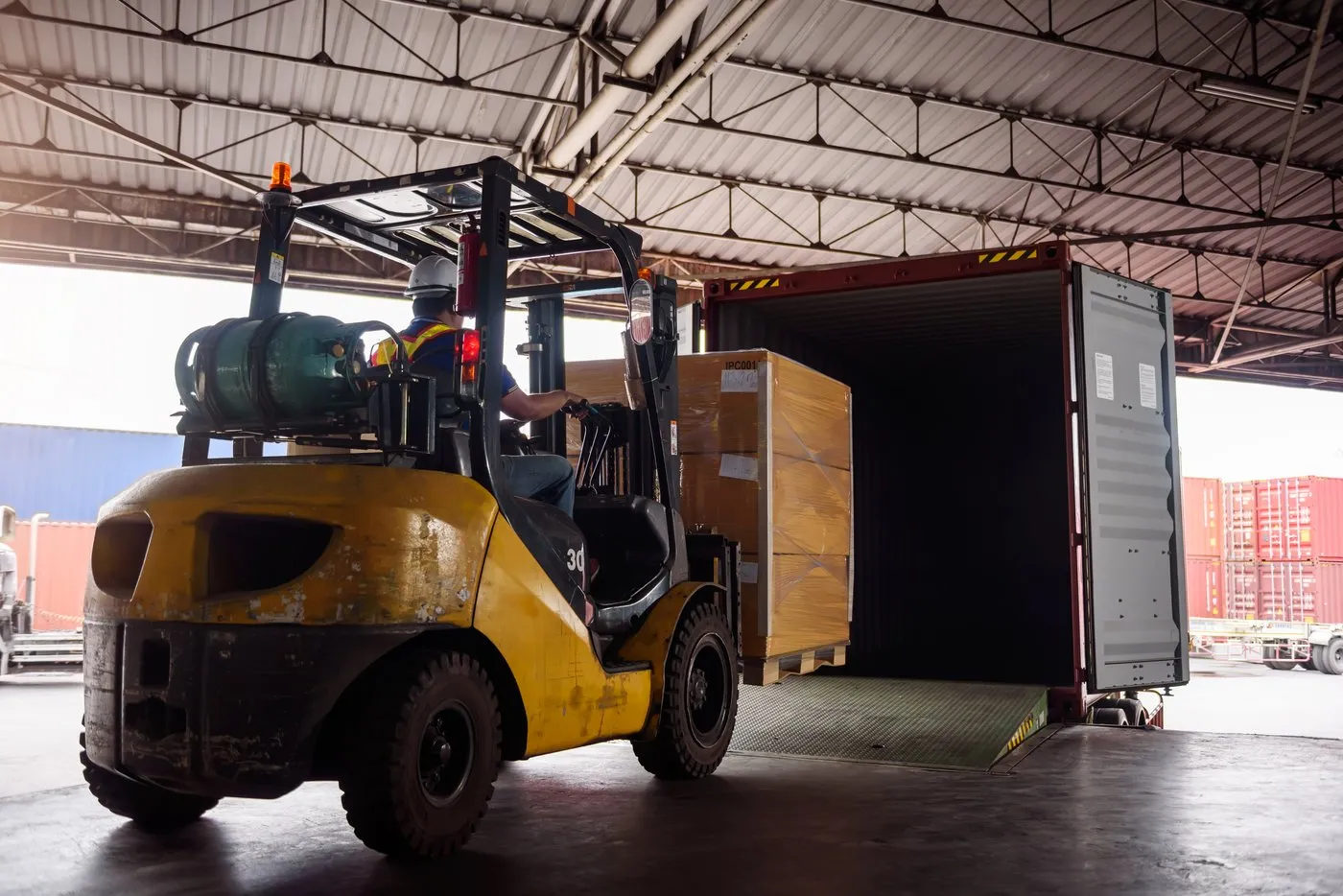
Picture a forty foot container of stone benchtops arriving at a warehouse late on a Friday. The forklift operator wants it empty before the end of the shift. A storeperson steps inside to free a strap so the next slab can be dragged forward. The operator, looking past the mast, does not see him go in.
A similar sequence seriously injured a worker at a NSW warehouse on 18 September 2025. This article sets out the risk, what NSW regulators expect, why existing controls leave a gap, and where Flagman AI detection can help with shipping container unpacking safety.
The problem: falling loads and forklifts in a confined space
SafeWork NSW reported that a worker was seriously injured at a NSW warehouse while helping move glass endcaps weighing about one tonne each out of a shipping container. The worker, standing inside the container, attached chains to the endcaps, which were dragged to the container door and lifted by a forklift driven by another worker. One endcap fell and trapped the worker against the side of the container.
It is not an isolated pattern. SafeWork NSW’s shipping containers page records 31 serious injuries and 3 deaths over a five year period from 2011, all involving men. The common causes it lists are being struck by unrestrained items or falling loads, people colliding with plant, and manual handling.
The wider numbers show why warehousing deserves attention. Safe Work Australia’s Key Work Health and Safety Statistics 2025 report 54 worker fatalities in transport, postal and warehousing in 2024, 29 per cent of all worker deaths, at a rate of 7.4 per 100,000 workers. Across all industries, being hit by moving objects caused 16.0 per cent of serious claims in 2023 to 2024.
Containers concentrate these risks. Goods shift in transit, sheet materials such as glass, stone and timber are unstable once restraints come off, and the forklift operator’s view inside is limited by the mast, the load and poor light.
The requirement: what NSW regulators expect
Under the Work Health and Safety Act 2011 (NSW), a business must eliminate or minimise risks so far as is reasonably practicable. The SafeWork NSW Code of Practice: Managing the risks of plant in the workplace requires the risk of powered mobile plant colliding with people to be managed.
For containers specifically, SafeWork NSW says to plan the unpacking before starting, have the right equipment ready, not let workers enter if the load could shift and trap them, not allow people and mobile plant to operate inside a container at the same time, and keep checking for loads that have moved. Its Guide for unpacking shipping containers adds a traffic management plan that separates people and plant, unpacking only in a designated area, removing only the restraint on the item about to be moved, and bracing items that could fall.
After the September 2025 incident, SafeWork NSW called on businesses to stabilise loads before work starts, inspect loads before anyone enters a container, use exclusion zones that keep workers outside containers and clear of forklift operating zones, and use only compatible, certified forklift attachments. Safe Work Australia also recommends opening doors against a short safety rope so shifted goods can be seen first.
Why existing controls leave a gap
- The exclusion zone is a rule, not a barrier. The container door has to stay open for the forklift, so there is nothing physical stopping a person walking in.
- Time pressure erodes the method. Demurrage charges, a waiting truck and peak season volumes push people to step in and free one more strap.
- The operator cannot see inside. The mast, the load and poor light hide anyone standing in the container.
- Breaches go unrecorded. Ten seconds inside the container rarely becomes an incident report.
The solution: how Flagman supports shipping container unpacking safety
Flagman uses computer vision to detect people and vehicles. At a container unpacking bay, sites can configure:
- A container doorway exclusion zone. A camera facing the open doors defines the doorway and the first metres inside the container as a restricted zone. When a person is detected there while a forklift is working, Flagman raises an alert.
- Forklift pedestrian detection around the bay. In its forklift setup, Flagman gives a warning at about 2.5 metres and a critical alert at about 1.5 metres, covering people who walk into the forklift’s path between the container and the warehouse.
- Warnings people can see and hear. Relay outputs can drive beacons or sirens at the bay, and can send a slow or stop signal only where the forklift’s controls accept an external signal, mainly on electric trucks. This is an added layer, not a certified safety function.
- Edge processing and event records. Video is analysed on site without needing the cloud or internet, using compatible ONVIF IP, USB or GMSL cameras. Each event is logged with time-stamped video on a central dashboard.
The same detection usually covers the dock next door. Our article on loading dock safety for trucks, forklifts and people explains how to set it up there.
Limitations: what Flagman cannot do
- Flagman cannot tell whether a load has shifted or is about to fall. Load restraint, bracing, A-frames and staged release of restraints remain the controls for falling loads.
- It does not replace a safe unpacking plan, a traffic management plan, barriers, or the decision to use a specialist unpacker for difficult loads.
- It has no published Safety Integrity Level or Performance Level rating and is not a certified safety function. Automatic slowing depends on the forklift accepting an external signal.
- Poor light deep inside a container, glare at the doors and the load itself can block the view. Camera position, lighting and alert tuning need a site assessment.
- It does not detect fumigants or assess manual handling risk. Camera monitoring of workers requires consultation and, in NSW, written notice under the Workplace Surveillance Act 2005.
Predictive maintenance: attachments and chains are part of the hazard
In the September 2025 incident, the load was dragged by chain and lifted by forklift. SafeWork NSW’s advice after the incident includes maintaining forklifts regularly, not altering them, and using only compatible, certified attachments. Its unpacking guide says to inspect and maintain attachments and slings and to check their ratings.
Predictive maintenance uses hour meters, fault codes and attachment, sling and chain inspection records to find wearing equipment before it fails during a lift. Flagman events add the safety view: which bays, shifts and trucks produce the most exclusion zone breaches. Sharktech Global builds Business Intelligence dashboards that bring maintenance, downtime and safety data together, including Flagman events, so warehouse, fleet and safety managers work from one picture.
A practical plan for container unpacking bays
- Talk to suppliers. Ask for loads packed and restrained for safe unpacking, and for fumigation status before the doors open.
- Write the unpacking method. Cover door opening against a safety rope, load checks, staged release of restraints, attachments and when to call a specialist.
- Set the exclusion rule. No person inside the container while the forklift is working, and a marked pedestrian exclusion zone around the bay.
- Consult and notify. Involve workers and health and safety representatives, and give 14 days’ written notice before camera monitoring starts.
- Pilot Flagman at the busiest bay. Position cameras on the doorway and the forklift path, check lighting, and tune zones with operators.
- Review weekly. Use event video in toolbox talks and act on repeat breaches. Our guide to narrow aisle forklift safety covers the same trucks once goods move into storage.
Flagman in Australia: local delivery by Sharktech Global
Sharktech Global, based in Liverpool, New South Wales, is the exclusive Australian and New Zealand delivery partner for Perleybrook Labs, the designer and manufacturer of Flagman. Sharktech Global assesses sites, installs and integrates Flagman with warehouse systems and forklifts, and provides local business-hours support. Learn more about its technology services for warehouses and distribution centres.
The outcome you can measure
- Alerts at the container door when a person enters while a forklift is working.
- Exclusion zone breaches and near misses recorded automatically instead of relying on self-reporting.
- A baseline of breaches per bay, shift and crew, so you can compare before and after training, method or roster changes.
- Time-stamped evidence for boards, health and safety committees and SafeWork NSW that your unpacking plan is followed.
Key takeaways
- Shipping container unpacking safety starts with supplier packing, a written method, load restraint and a traffic management plan.
- The gap is the open container door, where the exclusion rule has no physical barrier.
- Flagman adds doorway exclusion zone alerts, forklift pedestrian detection and a record of every breach.
- Well maintained forklifts, attachments and chains protect the margin your plan depends on.
Next step
Request a Flagman safety assessment or call Sharktech Global on 0468 017 373 to review your container unpacking bays, docks and forklift zones.
Sources: SafeWork NSW, worker seriously injured after being struck by falling load inside a shipping container (18 September 2025); SafeWork NSW, Shipping containers; SafeWork NSW, Guide for unpacking shipping containers: Unpacking; Safe Work Australia, Managing risks when unpacking shipping containers; Safe Work Australia, Key Work Health and Safety Statistics Australia 2025; SafeWork NSW, Code of Practice: Managing the risks of plant in the workplace. This article is general information only and is not legal or engineering advice. Seek advice for your site and jurisdiction.