Unguarded Chutes and Faulty Emergency Stops: Applying the Hierarchy of Controls at NSW Mines and Quarries with Flagman
Two 2026 NSW mine prosecutions show the cost of unguarded plant and faulty emergency stops. See where the hierarchy of controls puts guarding, and where Flagman fits.
In brief
- Two NSW mining prosecutions finalised in September 2026 involved hazards the operators already knew about: an unguarded chute, a conveyor emergency stop that had been defective for almost two years, and a mobile screen without effective guarding.
- NSW law expects risks to be controlled through the hierarchy of controls. Guarding, isolation and maintained emergency stops sit well above procedures, signs and supervision.
- Flagman AI vision adds detection, alerts and video evidence when people enter danger zones around crushing, screening and conveyor plant. It is a supplementary layer and never a substitute for guarding, isolation or a working emergency stop.
- The measurable outcome is earlier warning at the point of risk, a record of how often people are exposed, and maintenance and safety data that management can act on.
A plant operator walks along a running conveyor to clear spillage near the tail drum. The guard has been off since the last belt change, and everyone knows the emergency stop lanyard has not worked properly for months.
That scenario is illustrative. The pattern is not. Two NSW Resources Regulator prosecutions finalised in September 2026 show what happens when known defects stay on the list and administrative controls carry the load.
The problem: known hazards left in place at NSW mines and quarries
In the first case, Young Mining Company Pty Ltd was sentenced in the District Court of NSW on 30 September 2026 over the risk of workers falling into a chute at the Thuddungra Mine. The company was fined $750,000 for a gross negligence offence, and its managing director was fined $50,000 for failing to exercise due diligence. The court found the company took no steps to assess or control the risk from loose material near the unguarded chute, knew that suitable guarding would have eliminated the risk, and had known for almost two years that the conveyor emergency stop was defective. It also failed to enforce its isolation procedures.
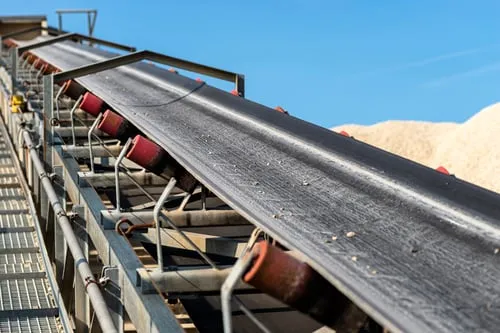
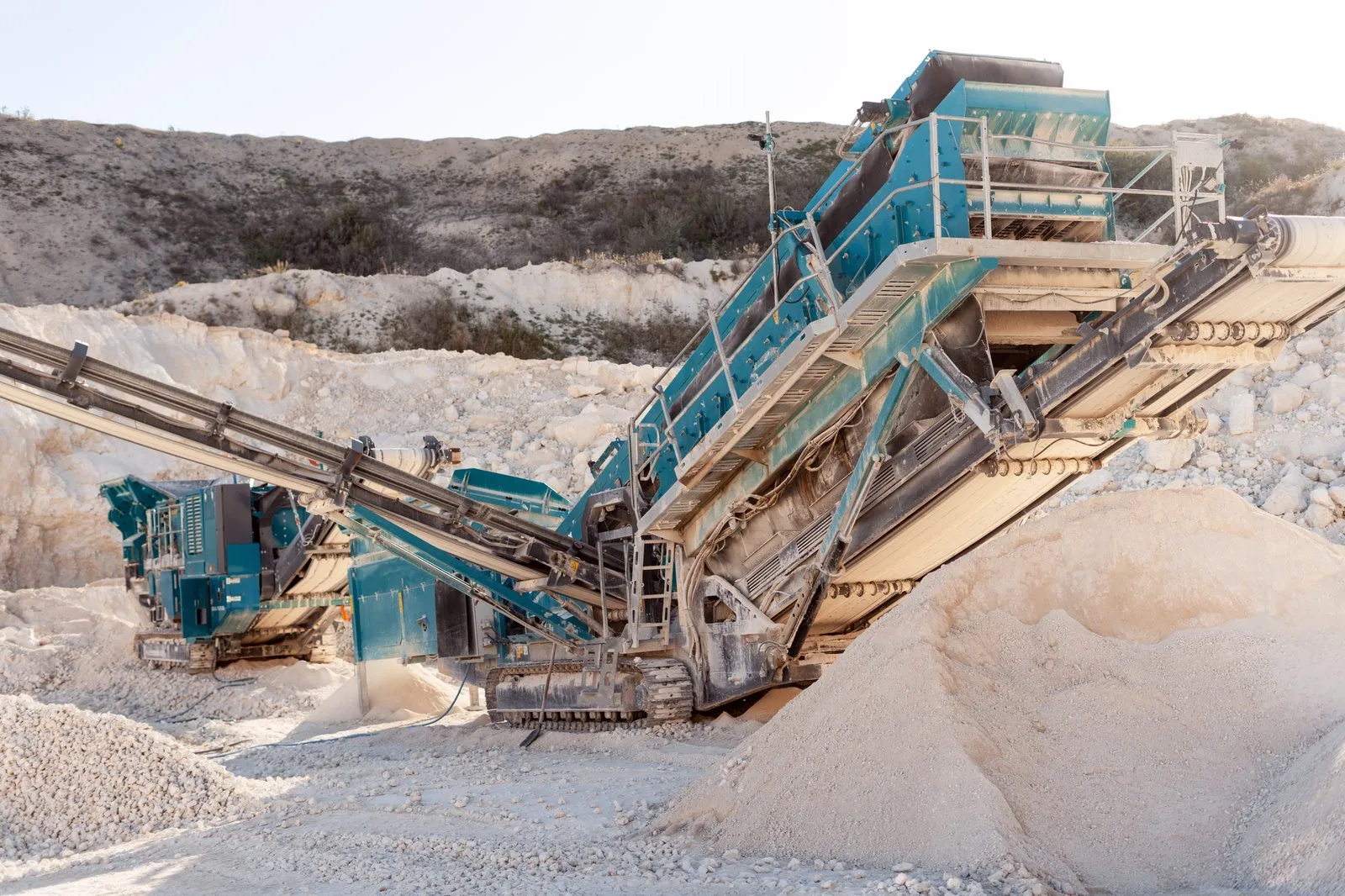
In the second case, Lynch Contractors Pty Ltd was convicted in the Industrial Court of NSW on 17 September 2026 after a worker was seriously injured when they became entangled in a moving conveyor belt on a mobile screen at Mt Magometon Quarry, near Coonamble, on 28 August 2023. The fine was $320,000, reduced to $240,000 for an early guilty plea. The court found failures to guard moving parts, to verify that the emergency stops worked, to confirm a cable bypassing the emergency stop circuit was disconnected, and to keep maintenance records.
These are not isolated findings. In an earlier entanglement campaign across 48 small NSW mines, the Resources Regulator issued notices at 47 of them. Emergency stop controls that were not available, maintained or tested were the most common concern, recorded 26 times, followed by signage (21) and isolation documentation (18). Nationally, Safe Work Australia reports 10 mining worker fatalities in 2024 and 3,300 serious mining claims in 2023 to 2024.
The requirement: the hierarchy of controls
Under the Work Health and Safety Act 2011 (NSW) and the mines legislation that sits alongside it, a mine operator must eliminate risks so far as is reasonably practicable and, where that is not possible, minimise them using the hierarchy of controls. SafeWork NSW’s Code of Practice, Managing the risks of plant in the workplace, sets out what that means for plant:
- Elimination, substitution, isolation and engineering controls come first. Administrative controls and personal protective equipment come last, because they rely on human behaviour and supervision and do not control the hazard at the source.
- Guarding follows a set order: a permanently fixed barrier where access is not needed, an interlocked barrier where it is, and only then a barrier removable with a tool or a presence sensing system.
- Emergency stops must be prominent and immediately accessible, but they should not be the only way a risk is controlled.
- Guards and warning devices must be regularly inspected and tested, and damaged plant that poses a risk should be withdrawn from service until the risk is controlled.
Officers carry their own due diligence duty, and the Thuddungra decision shows they can be personally fined.
Why existing controls leave a gap
Most sites have sound procedures on paper. The gap appears on shift. Guards come off for maintenance and are not refitted. Defects are logged and deferred because a part is on order. Spillage is cleared while the belt runs because isolating takes time. Each leaves the site relying on a rule, a sign and a person remembering to follow it.
There is also a visibility gap. Managers rarely see how often people enter danger zones around running plant, so a deferred guard looks like a backlog item rather than a live exposure.
The solution: how Flagman supports the hierarchy of controls
Flagman is an AI vision system that runs on site, on edge hardware, using compatible IP cameras. It does not need the cloud or an internet connection. On processing plant, it can be configured to:
- Watch defined danger zones around feed hoppers, chutes, tail drums, transfer points and screen walkways, and raise an alert when a person enters while the plant is running.
- Send a slow or stop signal through relay outputs or a programmable logic controller, using Modbus or PROFINET, where the machine’s controls allow. This is not a certified safety function and does not replace an emergency stop circuit.
- Record a time-stamped video event for every alert, so supervisors can review what happened and why.
In hierarchy terms, Flagman is a supplementary layer. An alert that depends on a person reacting behaves much like an administrative control, even though it is generated by technology. Its value is making exposure visible so higher-order fixes get prioritised. For more on guarding order, see how Flagman supports machine guarding, and for conveyor-specific controls, read closing conveyor entanglement gaps with isolation, guarding and Flagman detection.
Predictive maintenance: catching the defect before it becomes the hazard
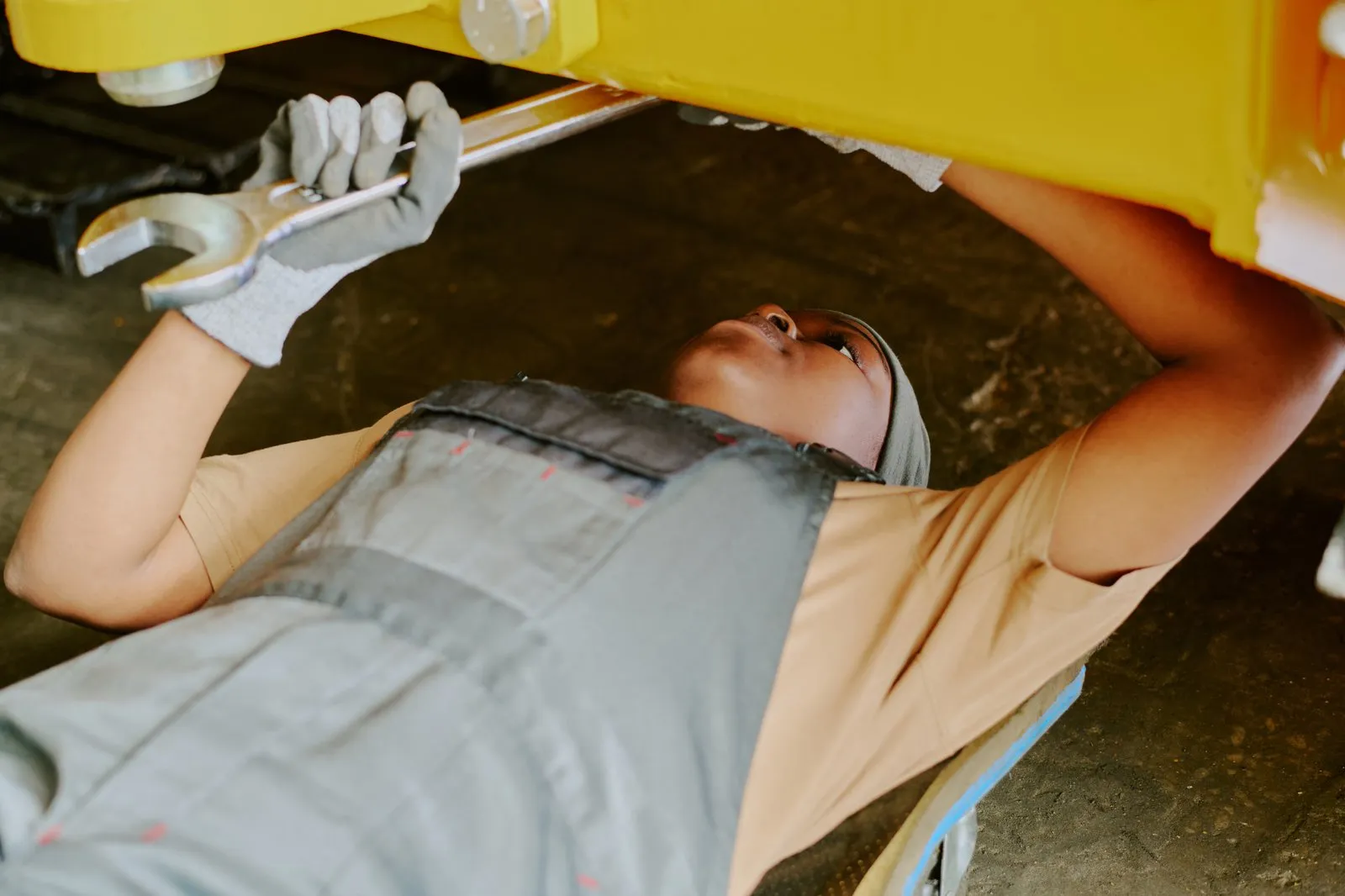
Both prosecutions involved plant condition. A defective emergency stop, missing maintenance records and plant allowed to fall into disrepair are maintenance failures that became safety failures. Predictive maintenance using vibration, temperature and belt tracking data can show a developing fault before it forces people into the line of fire to clear spillage or free a jammed belt.
Maintenance, downtime and safety data usually sit in separate systems. Sharktech Global builds Business Intelligence dashboards that bring maintenance work orders, defect registers, downtime and safety data together, including Flagman events. A view that shows an overdue emergency stop test next to a rising count of people entering the same conveyor zone gives managers a clear reason to act now.
Limitations: what Flagman cannot do
- Flagman cannot detect a faulty emergency stop, a bridged circuit or a missing guard. Those need inspection, testing and maintenance by a competent person.
- Flagman is not a guard, a presence sensing safeguarding device or an isolation or lockout device. It has no published safety integrity or performance level rating.
- Flagman has no hazardous area certification and must not be used in underground coal mines or explosive atmospheres.
- Dust, glare and rain can affect detection. Zones need tuning during a trial.
- Cameras at work trigger the Workplace Surveillance Act 2005 (NSW), including 14 days’ written notice, visible cameras and signage. Consult workers and health and safety representatives first.
A practical plan for your processing plant
- Walk every crusher, screen and conveyor and record each guard that is missing, removed or ineffective.
- Test every emergency stop and pull wire, and check for bridging cables or bypasses. Withdraw plant from service where a fault creates a risk.
- Put deferred safety-critical defects on a register that officers review, with dates and owners.
- Trial Flagman detection in the zones where people still work near running plant.
- Bring maintenance, downtime and Flagman event data into one dashboard and review it monthly.
The outcome you can measure
A well-run deployment gives you an alert at the point of risk, a time-stamped record of each event, a baseline of exposure by zone and shift, and a combined view of open defects and safety events. That evidence supports safety management system audits and officer due diligence.
Flagman in Australia: local delivery by Sharktech Global
Sharktech Global, based in Liverpool, New South Wales, is the exclusive Australian and New Zealand delivery partner for Perleybrook Labs, which designs and manufactures Flagman. Sharktech Global assesses sites, installs and integrates Flagman with existing cameras, alarms and plant controls, and provides local support during business hours. Learn more about Sharktech Global’s services for mining and resources operations.
Key takeaways
- Two September 2026 NSW prosecutions turned on known, unfixed hazards: missing guarding, defective emergency stops and weak isolation.
- The hierarchy of controls puts guarding, isolation and maintained emergency stops ahead of procedures and supervision.
- Flagman adds detection, alerts and evidence around running plant. It strengthens, and never replaces, physical controls.
Next step
Request a Flagman safety assessment or call Sharktech Global on 0468 017 373. The assessment reviews your crushing, screening and conveyor areas and shows where detection would add the most protection.
Sources: NSW Resources Regulator, Young Mining Company Pty Ltd and Managing Director convicted and fined for breaches of WHS laws (2 October 2026); Conviction and fine for breach of WHS law, Lynch Contractors Pty Ltd (18 September 2026); Consolidated report: Entanglement, small mines, June 2021 to March 2022; SafeWork NSW, Code of Practice, Managing the risks of plant in the workplace; Safe Work Australia, Key Work Health and Safety Statistics Australia 2025. This article is general information, not legal advice. Check your obligations with the regulator or a qualified adviser.