Conveyor Entanglement Keeps Happening: How to Close the Gaps with Isolation, Guarding and Flagman Detection
A NSW Resources Regulator inspection program issued entanglement notices at 47 of 48 mines assessed. What the findings mean for conveyor safety in mining and manufacturing, and where AI detection helps.
In brief
- When the NSW Resources Regulator inspected 48 small mines for entanglement hazards, 47 received notices. The most common problems were emergency stops, isolation documentation and missing guards on nip points, belt drives and transfer points.
- Conveyors combine the three ingredients of serious entanglement: rotating parts, nip points and frequent human access for cleaning, clearing spillage and maintenance.
- The controls that matter most are guarding, isolation and lock-out before any access, and emergency stops that work along the full length of the conveyor.
- AI detection can add continuous monitoring of people near moving conveyors, warning workers and sending stop or slow signals, but it never replaces isolation.
47 of the 48 mines inspected for entanglement hazards received notices from the regulator.
NSW Resources Regulator, June 2021 to March 2022
Conveyors are the arteries of mines, quarries, processing plants and factories. They run for long hours, often across large and remote areas, and they need constant attention: spillage to clean, belts to track, rollers to change and blockages to clear. Every one of those tasks brings a person close to moving machinery.
That is why entanglement remains a priority for Australian regulators, and why a recent regulator inspection program offers useful lessons for anyone responsible for conveyor safety.
What the NSW inspection program found
Between June 2021 and March 2022, the NSW Resources Regulator assessed 48 small mines for entanglement hazards. Forty-seven of them received entanglement-related notices, and 74 notices were issued in total, including prohibition notices, improvement notices and notices of concern. One prohibition notice concerned workers who could become entangled in exposed rotating parts of conveyors on a mobile crushing plant.
The most common concerns recorded in the notices were:
| Concern | Occurrences |
|---|---|
| Emergency stops not available, maintained, tested or correctly installed | 26 |
| Poor signage for emergency stops or isolation points | 21 |
| Plant isolation documentation not current, implemented or available | 18 |
| Missing safeguarding at nip points on crushing or screening plant | 14 |
| Missing safeguarding on vibrating screen springs | 7 |
| Missing safeguarding on belt drives | 5 |
| Missing safeguarding on transfer points | 4 |
None of these are complex engineering failures. They are the basics: guards, stops and isolation. That is the most important lesson from the program, and it applies equally to manufacturing plants and warehouses that run conveyors.
Why conveyors are so unforgiving
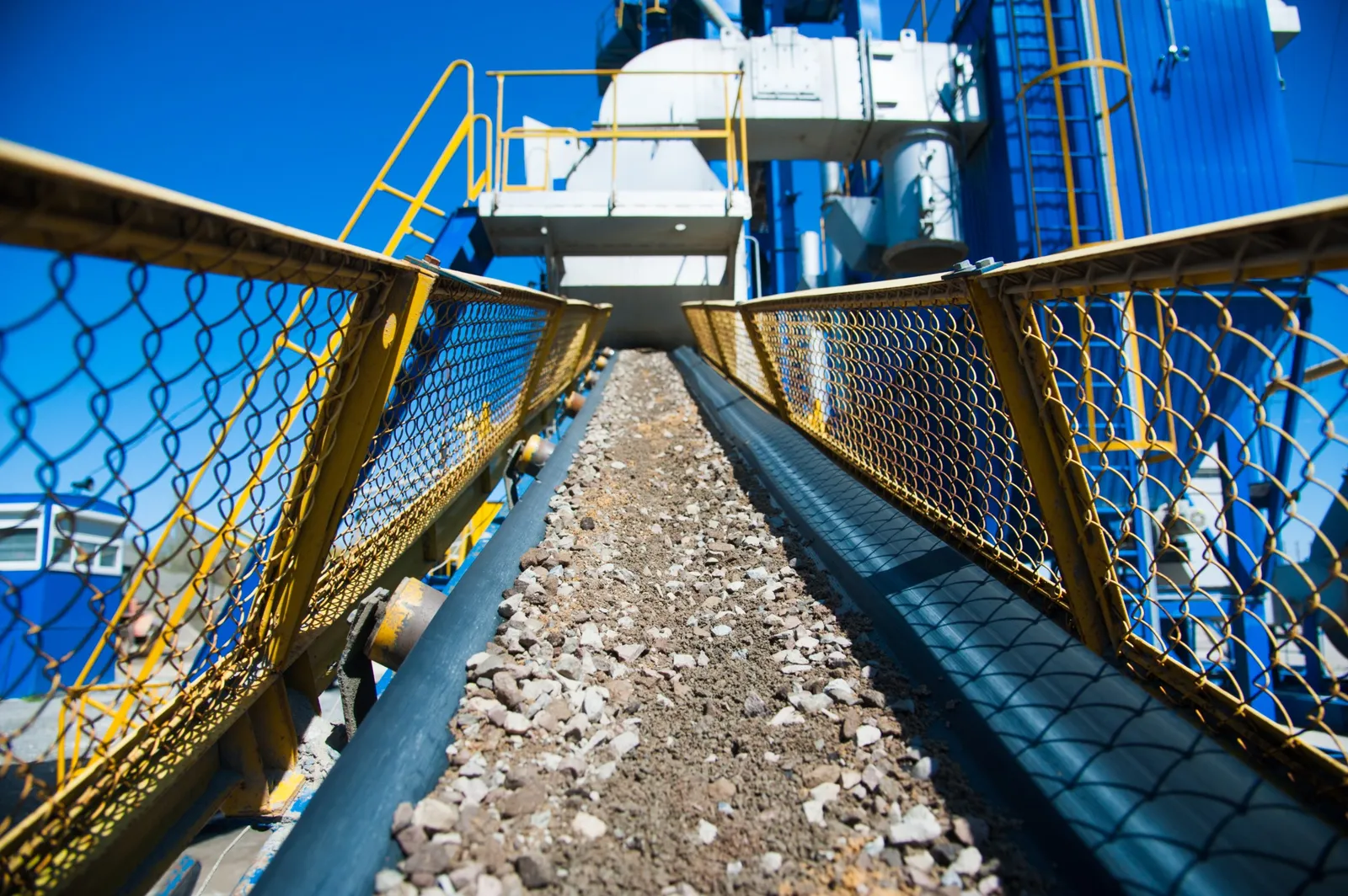
A conveyor’s nip points, where the belt meets a pulley or roller, can draw in a glove, sleeve or hand faster than a person can react. Clean-up work around tail pulleys, transfer points and return idlers is often done in awkward positions, sometimes with the belt still running. On long conveyors, a worker may be hundreds of metres from the nearest person who could stop the belt.
Leaders who have managed large, distributed infrastructure know that risks like these are controlled by discipline rather than luck. Dainu Devis, CEO of Sharktech Global, spent more than seven years across the NBN rollout and Telstra critical infrastructure, including as Area Manager for Telstra critical infrastructure facilities in New South Wales, through Ventia on the Telstra InfraCo contract (2021 to 2025). Across more than 2,200 sites, that portfolio recorded zero health, safety and environment incidents, built on isolation done properly every time and controls verified in the field. Read more about Dainu’s background.
The controls that matter most
Guarding
Nip points, belt drives, transfer points and tail pulleys must be guarded so that a person cannot reach the moving parts. Under regulation 208 of the model Work Health and Safety Regulations, permanently fixed guards come first, followed by interlocked guards where access is needed. Guards must be refitted after every maintenance task.
Isolation and lock-out
The Code of Practice for managing the risks of plant says plant should usually be isolated before maintenance or cleaning starts, and describes lock-out as the most effective isolation procedure. Cleaning a running conveyor is one of the most common causes of serious entanglement. Isolation procedures must identify every energy source, including stored energy in tensioned belts.
Emergency stops
Belt conveyors should be fitted with an emergency stop system, such as pull-wire switches, that a person can reach along the conveyor’s length. The regulator’s findings show that emergency stops are often present but untested or poorly maintained. They should be tested on a set schedule and clearly signed.
Mining-specific requirements
At New South Wales mines, conveyors fall within the mine’s mechanical engineering control plan, required under the Work Health and Safety (Mines and Petroleum Sites) Regulation 2022. Any change to conveyor controls, including adding monitoring technology connected to the control system, should go through the mine’s change management process.
The solution: how Flagman monitors conveyor danger zones

Even with good guarding and isolation, people work near running conveyors every day: inspecting, walking past, and sometimes taking shortcuts. AI detection platforms such as Flagman use cameras along the conveyor to recognise people entering defined danger zones, such as near tail pulleys or transfer points. They can trigger local alarms and, through a programmable logic controller or motor controller, send a stop or slow command to the conveyor. Events are logged with video, giving supervisors evidence of where people are approaching running equipment.
The limits are important. AI detection is not an isolation device and must never be used as a reason to work on a running conveyor. Dust, poor lighting and spillage can affect what cameras see, so camera placement, cleaning and testing must be part of the maintenance plan. Any stop function connected to a conveyor’s controls needs engineering assessment before it is relied on. For mines with explosive atmospheres, equipment also needs appropriate hazardous area certification.
A conveyor safety check you can run this month
- Walk the full length of every conveyor and check that all nip points, drives, pulleys and transfer points are guarded.
- Test every emergency stop and pull-wire, record the result and fix failures immediately.
- Review isolation procedures for cleaning and maintenance, and confirm they are current, signed and used.
- Check signage for emergency stops and isolation points.
- Talk to cleaners and maintenance crews about where they work near running belts, and why.
- Consider detection technology for areas where people regularly approach running conveyors.
The outcome you can measure
With guarding, isolation and emergency stops in order, Flagman adds an outcome inspections alone cannot: continuous awareness of people near running conveyors. Workers are warned before they reach a nip point, supervisors see where and when people approach moving equipment, and the operation gains a record it can use in control plan reviews and toolbox talks. The result is a conveyor safety system that is checked every minute of every shift, not only during inspections.
Key takeaways
Conveyor entanglement is preventable, and the regulator’s findings show the gaps are usually in the basics: guards, emergency stops and isolation. Get those right first. Then use AI detection to watch the danger zones continuously, warn people before contact and give supervisors the evidence they need to stop unsafe practices.
Next step
Operating conveyors in mining, quarrying or manufacturing? Request a Flagman safety assessment to identify where people approach running equipment. In Australia, Flagman is delivered and supported locally by Sharktech Global.
Sources: NSW Resources Regulator, Consolidated report: Entanglement, small mines, June 2021 to March 2022; SafeWork NSW, Code of Practice: Managing the risks of plant in the workplace (2022); NSW Resources Regulator, Code of Practice: Mechanical engineering control plan; model Work Health and Safety Regulations 2011, regulation 208. This article is general information, not legal or engineering advice for your site.