Food Processing Safety in Shepparton and Mildura: Safer Conveyor Cleaning and Hand Protection with Flagman
Food processing safety in Shepparton and Mildura: what a Mildura packing line hand injury teaches about guarding and lockout, and where AI conveyor alerts can help.
In brief
For food processing safety, Shepparton and Mildura sites depend on keeping hands away from moving conveyors, especially during cleaning. Flagman AI safety cameras, delivered by Sharktech Global, add conveyor hand safety zones and alerts in Victorian packing sheds, on top of guarding and lockout, never instead of them.
- Problem: workers clear jams and clean around running belts in busy packing sheds and factories.
- Requirement: OHS compliance Victoria means engineering controls on access to moving plant and isolation during cleaning.
- Gap: quick fixes on a running line happen in seconds, often unseen and unrecorded.
- Outcome: alerts when a hand or person enters a conveyor zone, plus records that show where access controls are weak.
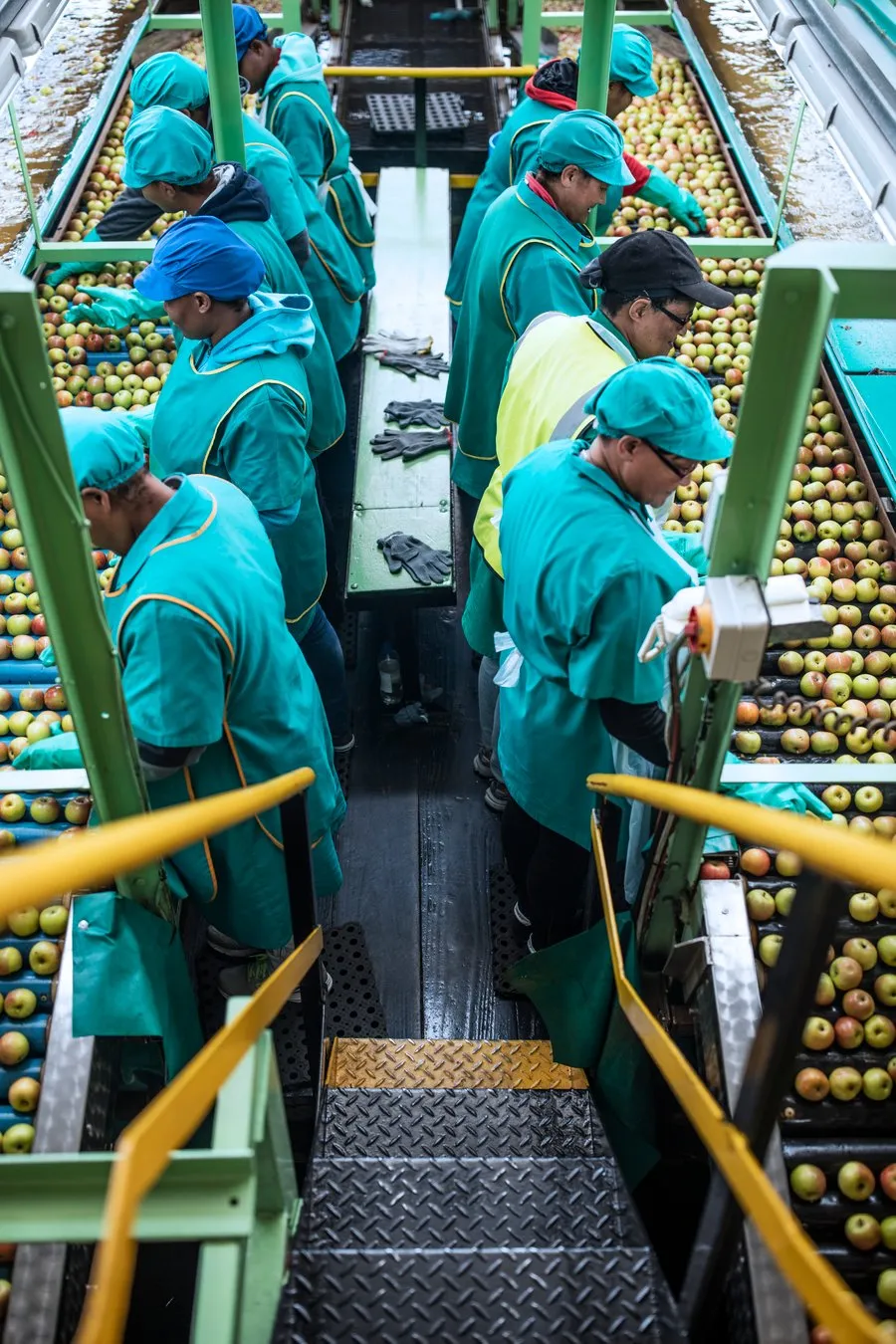
In the Goulburn Valley and Sunraysia, harvest sets the pace. Pears, stone fruit, citrus, grapes and dried fruit move from orchard to packing line in a rush. Conveyors run long hours. Cleaning happens between batches, sometimes while machines next door keep moving.
That rush is the risk. A piece of fruit jams under a bar. A worker reaches in with a tool, then a glove. Ask anyone in packing shed safety. Victoria’s busy harvest lines turn on that one moment.
Shepparton and Mildura’s industrial base
Food processing is a backbone of both regions. In Greater Shepparton, manufacturing provided 3,021 of 36,724 local jobs (8.2%) in 2022/23, according to economy.id, much of it in fruit, dairy and food processing. In the Mildura local government area, machinery operators and drivers made up 7.0% of employed residents, and labourers 14.5%, in the 2021 Census (ABS QuickStats). These are the people who run, clean and clear packing lines. When seasonal and new workers join an established crew, conveyor hand safety needs controls that do not rely on everyone knowing every machine.
Incident study: a gloved hand caught in a fruit packing conveyor in Mildura
This is an incident study from a regulator report. Flagman was not involved.
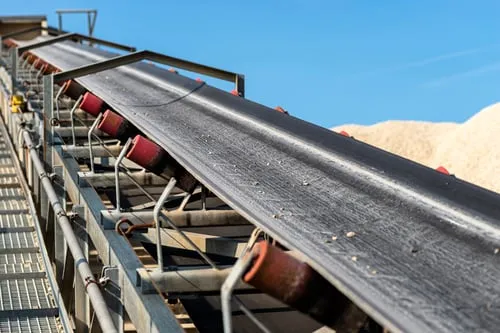
In July 2023, at a fruit packing factory in Mildura, a worker was cleaning around several operating machines, including sweeping up fruit that had fallen from nearby conveyors. Fruit became caught between a conveyor belt and a bar running across it. The worker tried to free it with a squeegee, then with his gloved left hand. The glove was caught between the moving belt and the bar, injuring his middle and pointer fingers.
WorkSafe Victoria alleged there were no engineering controls to prevent access to the moving plant, and no lock-out tag-out procedure to make sure plant was not running during cleaning. On 27 October 2025, the Mildura Magistrates’ Court heard the business had entered an enforceable undertaking, estimated at $340,000, while facing two charges. It includes upgrading forklifts with blue halo lights that project a three-metre pedestrian exclusion zone and trialling light detection and range warning technology, plus donations to industry safety talks and a local hospital foundation.
WorkSafe’s Sam Jenkin said training matters, but “it is also necessary to eliminate risk.”
Victoria regulates workplace safety under the Occupational Health and Safety Act 2004, not the model WHS laws used in most other states. Check Victorian guidance for OHS compliance Victoria.
Where Flagman fits, and where it does not
Flagman is an AI vision safety platform. It detects people, vehicles and PPE in camera video and runs on site on the Flagman Neo edge device. In a packing shed or food factory it can add:
- No hand zones. Define a hand and finger “no hand zone” over a nip point or belt transfer. Flagman can alert when a hand enters it.
- Conveyor zones. Restricted zones along conveyors flag people entering areas they should not reach while the line runs.
- Machine signals. PLC integration over Modbus and PROFINET can send a slow or stop signal only where the machine’s controls accept an external signal.
- Evidence of reach-ins. Time-stamped video event logs on a central dashboard show how often people reach into running plant, which points to where guarding and jam-clearing methods need work.
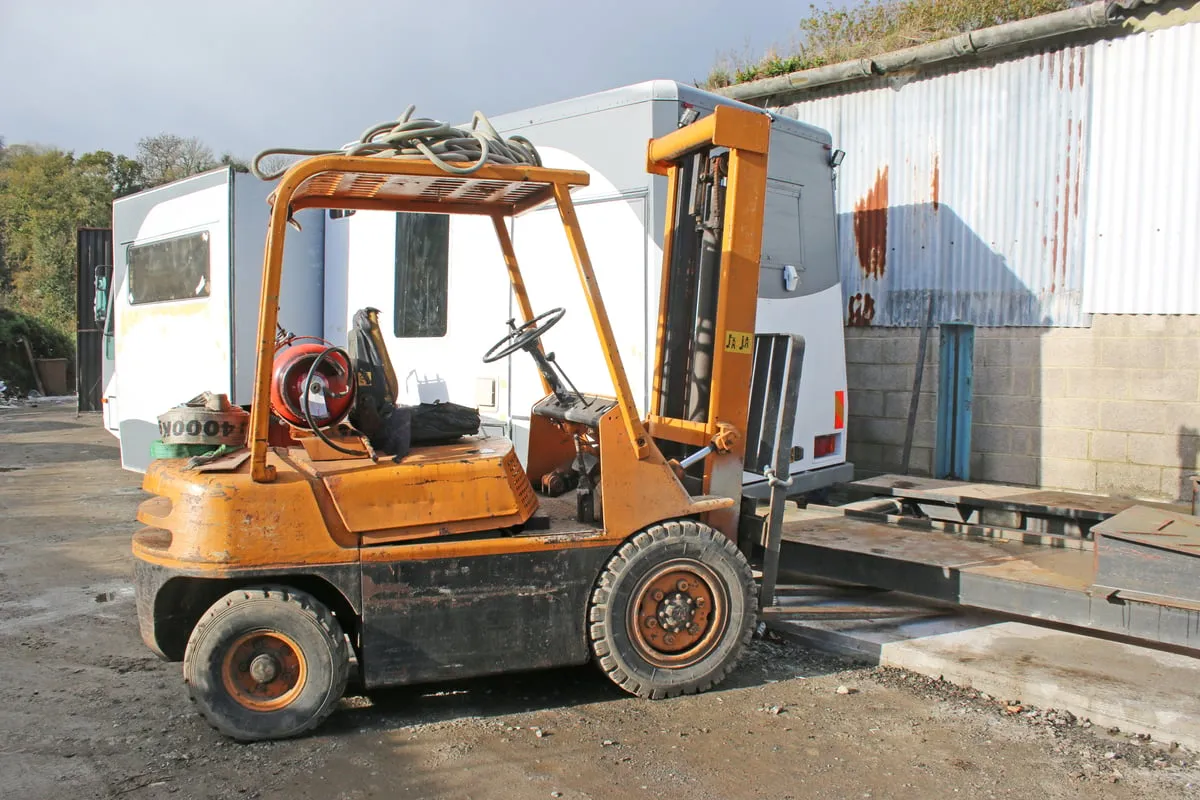
- Forklift zones. In the same shed, forklift pedestrian alerts at about 2.5 m (setup warning) and 1.5 m (critical) support the traffic controls the undertaking focused on.
For this incident, a camera could not stand in for the two controls WorkSafe said were missing. Fixed guarding that stops a hand reaching the belt and bar is the primary fix. Isolating and locking out the plant before cleaning is the other. An alert or even a stop signal comes after a hand is already near the hazard, and it only works where the conveyor accepts an external signal. Flagman is a supporting layer, not a guard.
Limitations
- Flagman does not replace machine guarding, interlocks, isolation or lock-out tag-out.
- It cannot guarantee a machine stops in time, and stop signals depend on the machine’s own controls.
- Detection depends on line of sight, lighting and dust. Steam, water spray, glare and gloves of different colours need testing.
- Flagman is not certified for hazardous areas or for underground coal mines.
- Consult workers and health and safety representatives before installing cameras, including seasonal staff.
- Check your state’s workplace surveillance rules and give workers clear notice before cameras go live.
A practical plan for Shepparton and Mildura sites
- Walk every line and list nip points, belt transfers and bars where fruit tends to jam.
- Guard what you can. Use fixed or interlocked guards so hands cannot reach moving parts. Our guide to the guarding hierarchy and AI vision explains the order of controls.
- Write a lockout procedure for cleaning and jam clearing, and make it quick enough that people use it.
- Write procedures in workers’ first languages and train every new seasonal starter.
- Trial AI safety cameras. Mildura and Shepparton sites can start on one high-jam line, with no hand zones at the worst nip points.
- Review reach-in events weekly and fix the cause, such as fruit build-up or a poor guard.
- Keep records of changes to support OHS compliance Victoria.
For broader conveyor risks, see our post on conveyor entanglement in mining and manufacturing.
Predictive maintenance: conveyor jams and belt condition
Jams are the trigger for most reach-ins. Worn belts, misaligned rollers, loose scrapers and bars set at the wrong height all make fruit catch more often. Every jam is another chance for a quick hand. In predictive maintenance, food processing sites should track belt tracking, roller wear and jam frequency by line, because fewer jams mean fewer reasons to reach in.
Sharktech Global builds Business Intelligence dashboards that bring maintenance, downtime and safety data together, including Flagman events. A manager can see whether reach-in alerts rise on a line that is overdue for belt service, then fix the machine as well as the behaviour. That makes predictive maintenance, food processing safety and uptime one conversation.
Flagman in Australia: delivered by Sharktech Global
Flagman Australia is delivered and supported by Sharktech Global, the exclusive Australian and New Zealand delivery partner for Perleybrook Labs, the developer of Flagman. Sharktech, based in Liverpool, New South Wales, assesses sites, installs and integrates Flagman with cameras and machine controls, and provides local business-hours support. Flagman works with ONVIF IP, USB and GMSL cameras, and processes video on site on the fanless, IP69K Flagman Neo, rated from minus 20 to plus 80 degrees Celsius, with no cloud needed. See how Sharktech supports manufacturing and food processing businesses.
The outcome you can measure
- Reach-in events per line, per shift and per week.
- Jam frequency compared with belt and roller maintenance status.
- Guards added or improved at nip points flagged by events.
- Lockout use during cleaning, checked against event records.
- Forklift and pedestrian proximity events in the packing shed.
Key takeaways
- Food processing safety in Shepparton and Mildura starts with guarding and lockout during cleaning.
- Victoria uses the OHS Act 2004, so follow Victorian guidance.
- Conveyor hand safety alerts from Flagman add visibility, but never replace guards or isolation.
- Fewer jams through better maintenance means fewer reasons to reach into running plant.
Next step
Request a Flagman safety assessment for your Shepparton or Mildura site, or call Sharktech Global on 0468 017 373.
Sources: WorkSafe Victoria, $340,000 safety spend after fruit packing injury (October 2025); economy.id, Greater Shepparton employment by industry; ABS 2021 Census QuickStats, Mildura LGA. This article is general information only and is not legal advice.