Lithium-Ion Battery Fires Are Rising in NSW Warehouses: Earlier Smoke and Flame Alerts with Flagman Fire and Smoke Detection AI
Lithium-ion battery fires are rising in NSW warehouses. See what the law expects and how Flagman fire and smoke detection AI adds earlier alerts alongside certified fire systems.
In brief
- Lithium-ion battery fires attended by Fire and Rescue NSW rose from 165 in 2022 to 324 in 2024, and incidents in storage buildings rose with them.
- NSW law expects warehouse operators to manage battery charging and storage risks, keep an emergency plan, and keep the building’s essential fire safety measures working.
- Ceiling smoke detectors and sprinklers respond once smoke or heat reaches them. In a high-bay distribution centre, that can be minutes after the first visible smoke at floor level.
- Flagman fire and smoke detection AI adds an earlier visual alert on cameras you choose, with a time-stamped video record, alongside (never instead of) your certified fire systems.
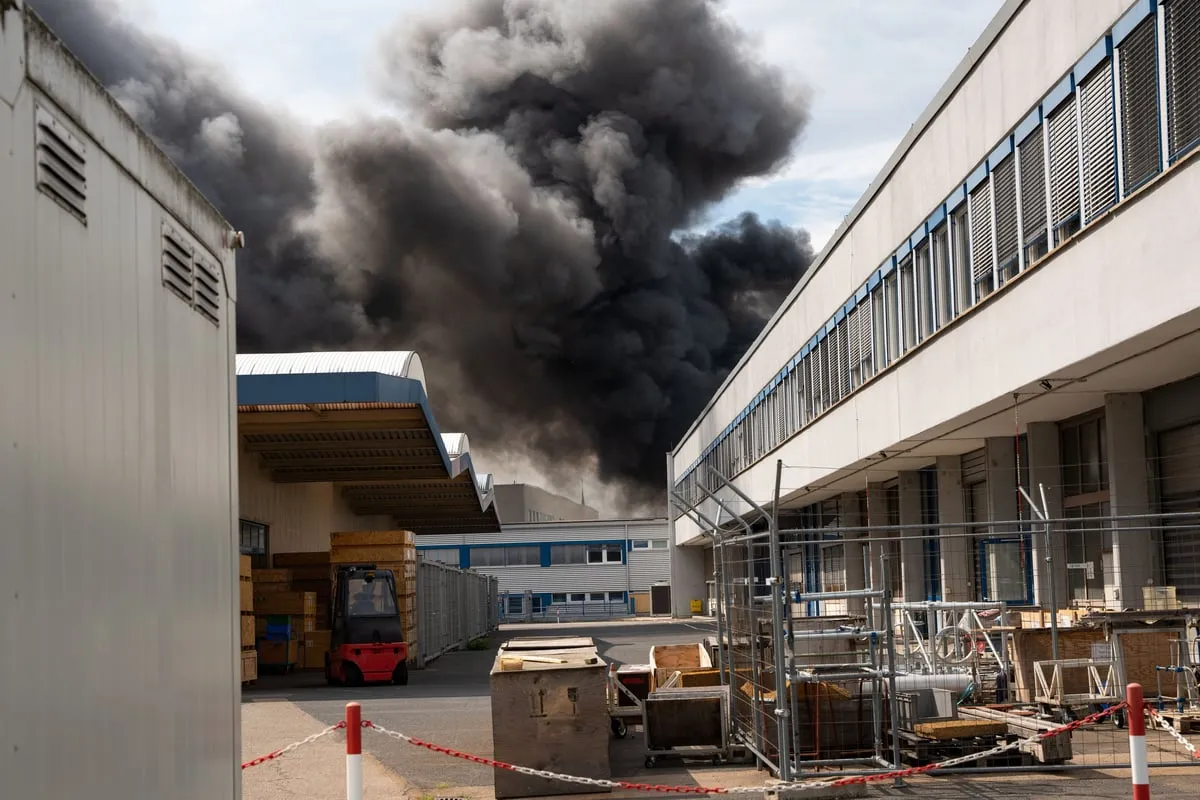
Picture 2.40 in the afternoon at a large distribution centre. A forklift battery has been on charge since the end of the morning shift. A thin line of grey smoke drifts from the charging bay, below the racking, where nobody is walking. The ceiling detectors are fourteen metres up. The smoke has not reached them yet.
This is the gap fire safety plans tend to miss: the space between the first sign of trouble and the moment the building’s systems notice it.
The problem: battery fires are now a warehouse risk, not a household one
Fire and Rescue NSW recorded 762 lithium-ion battery incidents between 2022 and 2024, climbing from 165 in 2022 to 273 in 2023 and 324 in 2024. In buildings classified for storage (National Construction Code Class 7b, which includes warehouses), the count rose from 4 in 2022 to 12 in 2024. Factories and laboratories (Class 8) recorded 9 in 2024. The same report found 40 per cent of devices were charging or recently off charge when they ignited.
The risk is visible in recent NSW events. In March 2026, more than 100 firefighters and 25 fire units spent about two hours fighting a large fire at an e-bike warehouse in Alexandria, in Sydney’s inner south. Firefighters submerged burnt batteries in water to stop them reigniting.
Batteries are not the only source. SafeWork NSW has published an incident in which a labourer was burned when a forklift contacted a skip bin of paint and thinners, which may have caused a spark. Distribution centres hold every ingredient: charging bays, packaging, chemicals and mobile plant moving all shift.
The requirement: what NSW expects of warehouse operators
SafeWork NSW states that a person conducting a business or undertaking using battery-powered plant must assess the risks and put controls in place for safe use, storage and handling. That includes inspecting and maintaining battery-powered plant such as forklifts, not leaving batteries charging unattended or for long periods, isolating damaged batteries in suitable containers, and having an emergency response plan that covers fires.
An uncontrolled fire or explosion is a notifiable dangerous incident even when nobody is hurt, and must be reported to SafeWork NSW immediately on 13 10 50. Since 22 August 2025, businesses that meet the 25,000 kilogram threshold must also prepare an emergency plan and submit it to Fire and Rescue NSW.
Building owners carry a separate duty. Under the NSW planning laws, an annual fire safety statement confirms that an accredited practitioner has assessed and verified the building’s essential fire safety measures, and copies go to the council and Fire and Rescue NSW. In mining, WorkSafe WA’s August 2026 bulletin on lithium-ion batteries goes further and tells operators to consider smoke and thermal alarms in battery storage areas.
Why existing controls leave a gap
Certified smoke detection and sprinklers are the backbone of fire safety and must stay that way. Their weakness is geometry. Smoke from a small fire at floor level can spread sideways under racking and stratify before it reaches a high roof. Detectors respond when smoke or heat arrives, not when a person would first have seen it.
Procedures have gaps too. “Do not charge unattended” is hard to supervise across a large site and a night shift. Battery inspections are periodic, so a pack damaged by an impact on Tuesday may not be found until next week’s check. CCTV records the fire, but nobody is watching forty screens at the moment it starts.
The solution: how Flagman fire and smoke detection AI adds an earlier layer
Flagman is an AI vision system that runs on an edge device on site, without a cloud or internet connection. It works with ONVIF IP cameras, so many sites can start with cameras they already own. For fire risk, you draw virtual detection zones over the areas that matter most: forklift and pallet jack charging bays, damaged battery quarantine areas, packaging and waste compactor zones, and chemical storage.
- Earlier visual alert. When the system sees smoke or flame in a zone, it raises an alert as it happens, with loud audio alarms, sirens or recorded voice messages in local languages, and a notification on the central dashboard.
- Integration with what you have. Relay outputs and PLC integration over Modbus or PROFINET can trigger warning beacons, alert wardens, or stop a conveyor feeding the area, where your systems are designed to accept that signal.
- Evidence. Every event is logged with time-stamped video, which supports incident notification, investigation and the record your emergency plan needs.
Predictive maintenance: catching the plant condition behind the fire
Many warehouse fires begin with equipment in poor condition: a forklift battery that has swollen after an impact, a charger running outside its specification, a conveyor bearing or motor overheating, or a switchboard connection working loose. Condition-based maintenance turns those signals into work orders before they become ignition sources.
The value comes when that data sits beside safety data. Sharktech Global builds Business Intelligence dashboards that bring maintenance, downtime and safety data together, including Flagman events. A site can then see, for example, whether smoke alerts in a charging bay cluster around a particular charger or battery fleet, and act on the equipment rather than the alarm.
Limitations: what Flagman cannot do
- Flagman is not a certified fire detection and alarm system and does not replace smoke detectors, sprinklers, fire hydrants or any essential fire safety measure. It does not connect to fire brigade monitoring.
- It sees only what the camera sees. Smoke hidden inside a battery case, behind stock or in an unmonitored aisle will not be detected. Camera placement and lighting decide coverage.
- Dust, steam, vehicle exhaust and reflections can cause false alerts. Zones need tuning during a trial so operators trust the alerts.
- It does not monitor battery chemistry or internal temperature, and it cannot predict thermal runaway before smoke or flame is visible.
- Cameras in workplaces trigger NSW workplace surveillance obligations, including 14 days’ written notice, visible cameras and signage. Consult workers before you deploy.
A practical plan for warehouse fire safety
- Map every place lithium-ion and lead-acid batteries are charged, stored and quarantined, including e-bikes and tools staff bring to work.
- Check charging bays against SafeWork NSW guidance: manufacturer chargers, ventilation, separation from packaging and stock, and no unattended long charges.
- Confirm your emergency plan covers battery fires and that, if you meet the threshold, it has been submitted to Fire and Rescue NSW.
- Ask your building owner for the latest annual fire safety statement, and confirm detector coverage in charging and storage areas.
- Choose two or three high-risk zones for a Flagman trial using existing or new cameras, and define who receives each alert and what they do.
- Run the trial for at least four weeks, log every alert, and record false alerts and response times.
The outcome you can measure
- Alerts raised at the point of risk, with time from first alert to warden response recorded for each event.
- A baseline of smoke and flame events by zone, compared before and after changes to charging practices.
- Battery and charger defects found and fixed through maintenance, tracked against alert history.
- A time-stamped evidence trail for incident notification, insurer conversations and board reporting.
For related controls on the same warehouse floor, read our guides to loading dock safety for trucks, forklifts and people and forklift and walkie stacker safety in NSW warehouses.
Flagman in Australia: local delivery by Sharktech Global
Sharktech Global, based in Liverpool, New South Wales, is the exclusive Australian and New Zealand delivery partner for Perleybrook Labs, which designs and manufactures Flagman. Sharktech Global assesses sites, installs and integrates Flagman with existing cameras, alarms and plant controls, and provides local support during business hours. Learn more about Sharktech Global’s services for warehouses and distribution centres.
Key takeaways
- Lithium-ion battery fires in NSW nearly doubled between 2022 and 2024, and charging is a common factor.
- NSW law requires risk controls for battery charging and storage, an emergency plan covering fire, and immediate notification of uncontrolled fires.
- Flagman adds an earlier visual alert and video evidence in the zones you choose. It strengthens, and never replaces, certified fire systems.
Next step
Request a Flagman safety assessment or call Sharktech Global on 0468 017 373. The assessment reviews your charging bays, storage areas and camera coverage, and shows where earlier fire and smoke alerts would add the most protection.
Sources: Fire and Rescue NSW, Lithium-ion battery incident data 2022 to 2024; Fire and Rescue NSW, e-bike warehouse fire, 27 March 2026; SafeWork NSW, Lithium-ion batteries; SafeWork NSW, Labourer burned in forklift fire; WorkSafe WA, Health and Safety Bulletin 27, Lithium-ion battery safety in mining; Sutherland Shire Council, Fire safety certificates and statements. This article is general information, not legal or fire engineering advice. Seek advice from a qualified professional for your site.