Sun Glare and Haul Road Safety at NSW Quarries: How Flagman Adds an Early Warning Where Loaders and Graders Cross
Sun glare haul road safety lessons from NSW Safety Alert SA26-03: what quarry operators must control, and where Flagman AI detection adds an early warning at crossing points.
In brief
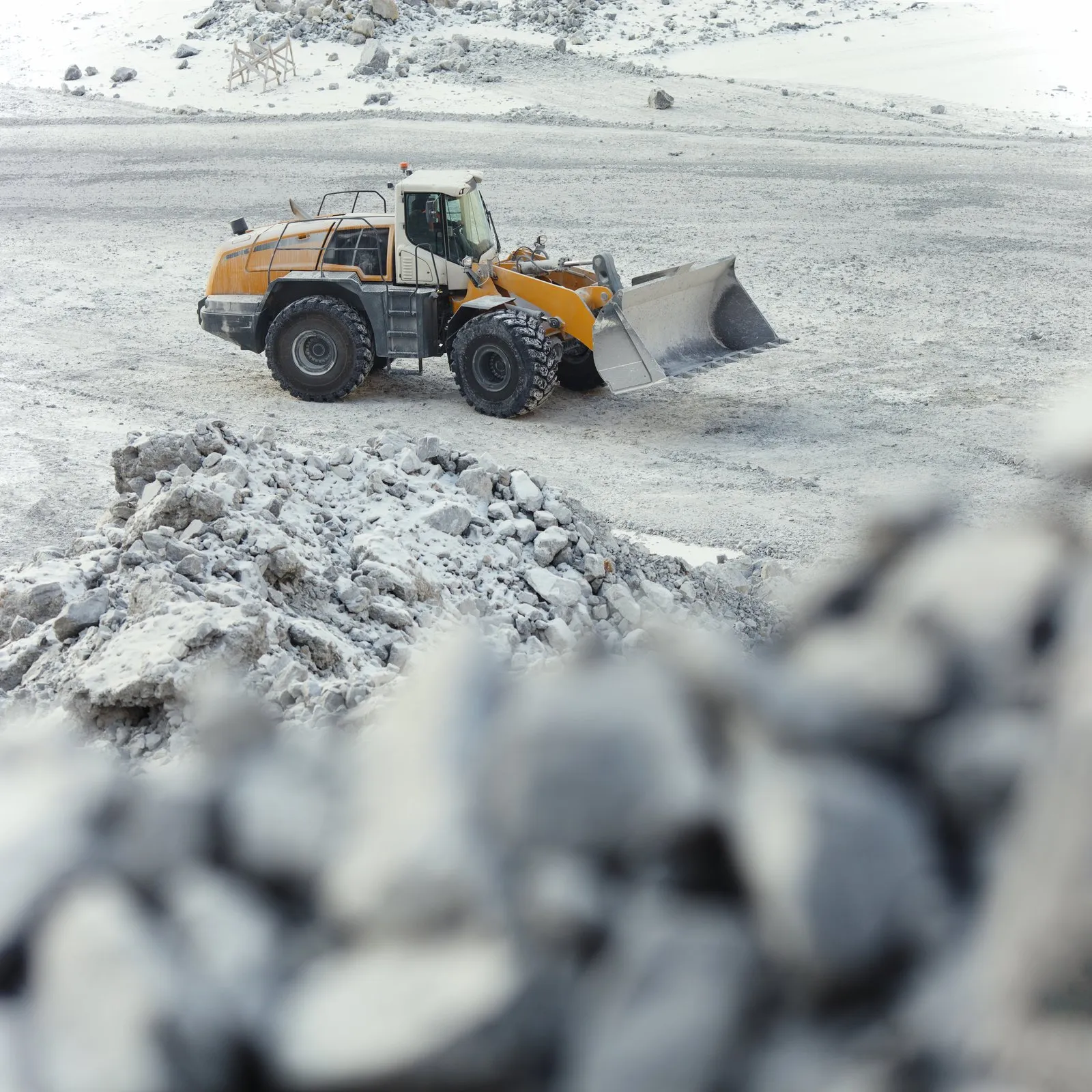
- In March 2026 the NSW Resources Regulator reported a quarry collision between a front-end loader and a grader after the loader operator raised the bucket to block sun glare and turned across a haul road.
- NSW mine operators must identify, assess and control the risks of reduced visibility from sun glare and other work environment hazards, using the hierarchy of controls.
- Separation, call-up signs and enforced procedures come first. Flagman AI detection can add an early warning at known crossing points and capture near misses as evidence.
- The outcome to aim for: fewer surprises at crossing points, and a record of what happens there at low sun angles.
It is 6:20 in the morning. The sun sits low over the pit and shines straight down the haul road. A loader operator lifts the bucket to cut the glare, the way people on site have done for years. A grader is coming the other way after refuelling. The loader turns across the road towards the crusher hopper. A radio call may or may not have been made. Nobody can confirm it.
That is the sequence the NSW Resources Regulator described in Safety Alert SA26-03. The grader’s cabin supports were severed and the cabin toppled. The grader operator walked away with a leg laceration and deep bruising. On another morning, the outcome could have been far worse.
The problem: restricted visibility turns routine movements into collisions
Vehicle interaction is the leading killer in Australian workplaces. Safe Work Australia reports that 188 workers died from traumatic injuries at work in 2024, and at least one vehicle was directly involved in 66% (124) of those deaths. Mining recorded 10 worker fatalities in 2024, a rate of 3.4 per 100,000 workers and 39% above its five-year average.
The SA26-03 investigation shows how ordinary the failure points were. The site’s documented system required buckets to be lowered while driving, but driving with a raised bucket to block sun glare had become normal for workers and managers. The quarry had not identified or controlled sun glare as a hazard, so workers chose their own controls. There were no call-up or hold point signs, so drivers relied on memory for which radio call to make and where. Neither operator was wearing a seat belt, and the grader was being driven with its left access door open.
None of this is unusual at small and mid-sized quarries. That is why it matters.
The requirement: what the NSW Resources Regulator expects
Following the incident, the regulator issued a notice prohibiting heavy mobile equipment from being driven with buckets raised where the driver’s view is obstructed. A second notice required the operator, in consultation with workers, to identify, assess and control the risks of reduced visibility from sun glare.
For the wider industry, SA26-03 states that mine operators must identify all reasonably foreseeable hazards that could create risks from reduced visibility due to the sun and other work environment hazards. Those risks must be eliminated or, where that is not reasonably practicable, minimised using the hierarchy of controls in section 36 of the Work Health and Safety Regulation 2025. The alert also asks operators to:
- review the Resources Regulator technical reference guide for roads or other vehicle operating areas (ROVOA), particularly Layer 2 (vehicle separation) and Layer 6 (operating compliance)
- have systems that make sure safety management system controls are actually followed
- install and maintain signs showing which radio calls are required and where to make them
- investigate, and build where reasonably practicable, roadways that separate vehicles.
The technical reference guide sets out a nine-layer control model for surface mines: site requirements, vehicle separation, operating procedures, authority to operate, fitness to operate, operating compliance, operator awareness, operator advisory and machine intervention. The first layers design the risk out. The last layers are reactive technology that works in seconds.
Why existing controls leave a gap
Procedures and radio protocols rely on people seeing, hearing and remembering at the moment of risk. Sun glare attacks exactly that moment. A low sun can blind an operator for a few seconds at the same time every day, in the same direction, at the same crossing point. A radio call can be missed under engine noise or radio traffic. And when a workaround such as a raised bucket becomes normal, supervisors stop seeing it as a deviation.
Most sites also have no objective record of what happens at a crossing point. Near misses at dawn often go unreported, so the hazard only becomes visible after contact.
The solution: how Flagman adds an early warning at crossing points
Flagman is an AI vision system that runs on edge hardware on site, with no cloud connection required, and works with standard IP cameras. At a quarry, its realistic role is at fixed, known locations where vehicles cross or merge: the end of a divided haul road, the turn into a run-of-mine stockpile, a crusher hopper approach or a workshop entry.
- Zone detection at the crossing. Cameras watch a defined zone and detect vehicles and people entering it.
- Warnings beyond the cab. Relay outputs can switch flashing beacons or illuminated “vehicle crossing” signs, so an approaching driver gets a visual cue that does not depend on a radio call being heard.
- Time-stamped video events. Each detection is logged with video, so supervisors can review movements at low sun angles and see whether call-up points and hold points are being respected.
- Near-miss data. Close calls that would never be reported become reviewable events, which supports consultation with workers and the review of controls the regulator expects.
In the nine-layer model, this sits in the operator awareness and advisory layers. It supports the design and procedural layers. It does not replace them.
Limitations: what Flagman cannot do
- Flagman is not a certified collision avoidance or machine intervention system for haul trucks or mobile plant, and it is not in-cab fatigue or distraction monitoring.
- Cameras are affected by the same low sun, dust and fog that affect operators. Camera placement and angle must be tested at the worst sun angles during a site trial.
- It cannot stop a loader turning across a road or make an operator lower a bucket. Enforcement of procedures remains a supervision job.
- It is not certified for hazardous areas, so it is not suited to underground coal or explosive atmospheres.
- Workplace surveillance notice and consultation obligations apply before cameras go live.
Predictive maintenance: plant condition is part of the visibility hazard
Visibility is not only about the sun. Pitted windscreens, failed wipers, missing sun visors, weak headlights, faulty beacons and unreliable two-way radios all reduce what an operator can see and hear. In SA26-03 the grader’s radio could not be tested because of cabin damage, which left a question nobody could answer.
Tracking these defects as condition data, rather than as one-off fixes, lets a site schedule repairs before a known glare season and see which machines keep returning with the same faults. Sharktech Global builds Business Intelligence dashboards that bring maintenance, downtime and safety data together, including Flagman events, so a manager can see whether near misses cluster around particular machines, times or crossing points.
A practical plan for the next glare season
- Map every haul road, intersection and crossing point that faces east or west, and record when the sun is lowest along each.
- Consult workers about where glare is worst and what workarounds they use today.
- Apply higher order controls first: separated roads, realigned crossings, one-way systems or hold points, and changes to timing of plant movements.
- Install call-up and hold point signs and enforce the bucket-lowered rule.
- Add visual warnings and Flagman detection at the crossings that remain.
- Review Flagman events and maintenance data monthly, and feed findings into your roads or other vehicle operating areas principal hazard management plan.
For related reading, see safer haul road intersections in Muswellbrook mines and light vehicle and pedestrian separation at Hunter quarries.
The outcome you can measure
- A documented sun glare risk assessment with controls mapped to the nine layers.
- A visual warning at each high-risk crossing that does not rely on a radio call.
- A baseline of vehicle movements and near misses at each crossing, compared before and after new controls.
- Evidence for boards, workers and the regulator that controls are followed, not just written down.
Flagman in Australia: local delivery by Sharktech Global
Sharktech Global, based in Liverpool, New South Wales, is the exclusive Australian and New Zealand delivery partner for Perleybrook Labs, the designer and manufacturer of Flagman. Sharktech Global assesses sites, installs and integrates Flagman with existing cameras and site systems, and provides local support during business hours. Learn more about mining data analytics and AI safety from Sharktech Global.
Key takeaways
- Sun glare is a foreseeable hazard, and NSW mine operators must identify and control it.
- Normalised workarounds, missing call-up signs and missed radio calls created the gap in SA26-03.
- Separation and enforced procedures come first. Flagman adds a visual warning and evidence at crossing points.
- Plant condition data and Flagman events together show where visibility risk is building.
Next step
Request a Flagman safety assessment or call Sharktech Global on 0468 017 373.
Sources: NSW Resources Regulator, Safety Alert SA26-03, March 2026; NSW Resources Regulator, Technical reference guide: Roads or other vehicle operating areas principal hazard management plan for surface mining operations, July 2025; Safe Work Australia, Key Work Health and Safety Statistics Australia 2025. This article is general information only and is not legal advice.