Robot Cell Safety: Keeping People Out of Danger Zones on Automated Lines with Flagman
Robot cell safety depends on people staying out while robots can move. See how Flagman restricted zone detection alerts on cell entries in NSW manufacturing, and its limits.
In brief
- Robot cells and automated lines are fenced and interlocked, yet people still enter them to clear jams, adjust tooling and carry out maintenance, often while the line is under pressure to restart.
- In New South Wales, the WHS Regulation lists industrial robots among plant that needs specific control measures, and guarding must follow a set order: fixed barriers, interlocked barriers, tool-removable barriers, then presence sensing.
- Flagman restricted zone detection watches the danger zone around a robot cell, alerts when a person is inside, and can send a slow or stop signal where the cell’s controls allow.
- The outcome is earlier warnings, recorded entries that would otherwise go unseen, and evidence that your robot cell safety controls are working.
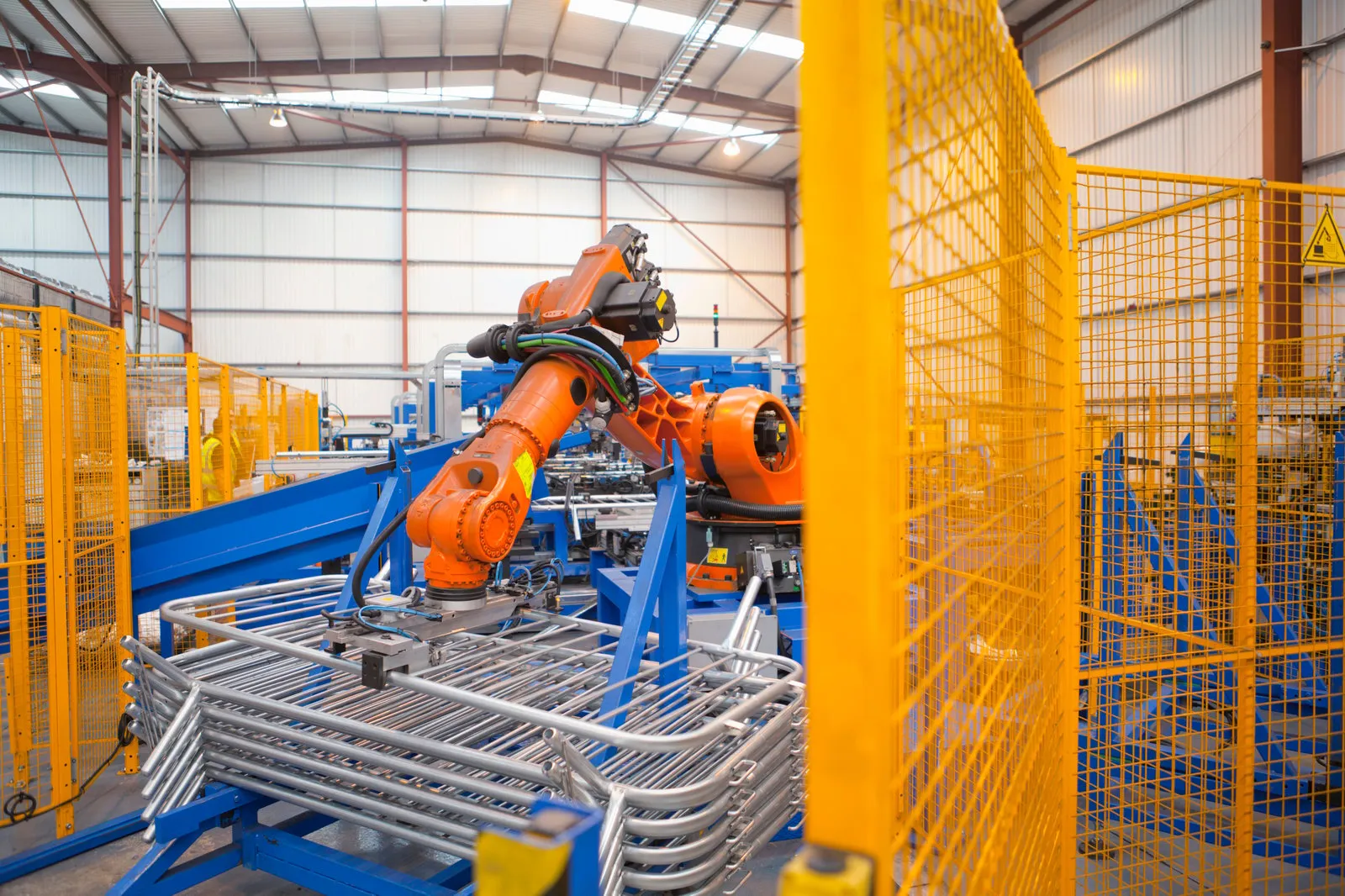
It is late in the afternoon shift and a palletising robot has faulted for the third time. A part has jammed on the infeed. The fastest fix is to step through the gate, free the part and get the line moving. The interlock is there. So is the isolation procedure. But the cell looks still, and the operator has done this many times before.
Robot cell safety depends on people respecting the boundary every time, not just most of the time. A robot that appears to be stopped may be waiting for a signal, holding stored energy, or about to resume a programmed path. This article explains the risk, what New South Wales law expects, where existing controls leave a gap, and where Flagman AI safety cameras can help.
The problem: people inside the cell while the robot can still move
Safe Work Australia’s Key WHS Statistics Australia 2025 records 7 worker fatalities in manufacturing in 2024 and 14,800 serious claims in 2023 to 2024, a frequency rate of 9.4 serious claims per million hours worked. Across all industries, being hit by moving objects accounted for 23,400 serious claims, or 16 per cent. SafeWork NSW describes machines as a leading cause of workplace fatalities and injuries in the manufacturing sector.
Automated equipment is part of that picture. On 28 February 2022, a 43-year-old worker at a manufacturing plant in Moorebank, New South Wales, was performing maintenance above a guarded area on a polystyrene shape moulding machine when a large hydraulically powered arm struck him, causing fatal crush injuries. SafeWork NSW’s recommendations after that incident focused on preventing guarding bypass, isolating energy sources and releasing stored hydraulic and pneumatic energy before anyone enters a hazardous area.
Collaborative robots add a further layer of confusion. SafeWork NSW research published in May 2025 found that barriers to safe implementation include unclear boundaries between cobots and industrial robots, and inconsistent approaches to risk assessments when new tasks are introduced. Earlier SafeWork NSW funded research noted that industrial robots are sometimes converted for collaborative use without the appropriate measures.
The requirement: what New South Wales expects
Under the Work Health and Safety Regulation 2025 (NSW) and the SafeWork NSW Code of Practice: Managing the risks of plant in the workplace, industrial robots are listed among plant that requires specific control measures. Guarding follows a clear order under regulation 208:
- A permanently fixed barrier where access is not needed during operation, maintenance or cleaning.
- An interlocked physical barrier where access is needed.
- A barrier that can only be removed with a tool, if neither of the above is reasonably practicable.
- A presence-sensing safeguarding system that eliminates risk, if physical guards are not reasonably practicable.
The code also expects plant to be isolated before maintenance or cleaning, with lockout as the most effective isolation procedure. Regulation 213 requires maintenance, inspection and, where necessary, testing of plant by a competent person, following the manufacturer’s recommendations. Regulation 226 requires records of tests, inspections and maintenance for presence-sensing systems. Where plant must run during maintenance, SafeWork NSW expects controls designed for that purpose, such as inching or jogging modes operated by the person doing the work.
Why existing controls leave a gap
Fencing, interlocks, light curtains and isolation remain the foundation of machine guarding for robot cells. The gap is behavioural and visible only after the fact:
- Bypassed or defeated interlocks. Spare keys, taped switches and gates held open let people in without the system knowing.
- Entry through openings not designed for people. Infeed and outfeed conveyor openings, pallet entry points and gaps under fencing.
- Second person risk. One worker isolates correctly, a second follows them into the cell without their own lock.
- No record of near misses. A gate opened during automatic mode is rarely reported unless someone is hurt.
- Mixed cobot and industrial robot areas. Workers used to working beside a cobot may treat a neighbouring industrial robot the same way.
The solution: how Flagman supports robot cell safety
Flagman uses computer vision to detect people in defined zones. For a robot cell, a site can configure:
- Restricted zone detection inside the cell. A person detected inside the fenced envelope triggers an alert to the operator, supervisor and control room.
- Approach zones at gates and openings. Early warnings when a person nears an infeed opening or a gate during automatic mode.
- Control system integration. Relay outputs and PLC integration over Modbus and PROFINET can send a slow or stop signal where the cell’s controls allow. This is an added layer, not a certified safety function.
- Edge processing on site. Video is analysed locally without needing the cloud or internet, using compatible ONVIF IP, USB or GMSL cameras, including suitable existing cameras.
- Time-stamped event video and a central dashboard. Every entry is logged with a short clip, so safety and maintenance teams can see when, where and why people went in.
Our earlier article on machine guarding and the guarding hierarchy explains how AI vision fits alongside physical guards.
Limitations: what Flagman cannot do
- Flagman is not a certified presence-sensing safeguarding device and has no published Safety Integrity Level or Performance Level rating. It must not replace fencing, interlocks, light curtains or safety-rated robot functions.
- Flagman is not an isolation or lockout device. It cannot confirm that hydraulic, pneumatic or electrical energy has been released.
- Detection depends on camera placement, lighting and line of sight. Robot arms, pallets and tooling can block views, so each cell needs its own camera assessment.
- Camera monitoring of workers requires consultation and, in New South Wales, written notice under the Workplace Surveillance Act 2005. Monitoring robots inevitably means monitoring the people working with them.
Predictive maintenance: why robot condition is a safety issue
Many robot cell entries start with an equipment problem. Worn grippers drop parts, misaligned sensors cause false faults, conveyors jam at the infeed, and vacuum cups lose grip. Each fault creates another reason for someone to step inside. A cell that faults five times a shift creates five chances for a shortcut.
Predictive maintenance turns that pattern around. By tracking fault codes, cycle counts, gripper wear and unplanned stops, maintenance teams can fix the cause before it pulls people into the danger zone. Flagman entry events add the missing piece: they show which faults lead to entries and how often. Sharktech Global builds Business Intelligence dashboards that bring maintenance, downtime and safety data together, including Flagman events, so production, maintenance and safety teams can see which equipment problems are creating exposure.
A practical plan for robot cell safety
- Audit every cell against regulation 208. Check fencing, interlocks, openings and presence-sensing records before adding detection.
- Review isolation. Confirm stored energy release steps and personal locks for every person entering. See our guide to lockout tagout and machine restart safety.
- Separate cobot and industrial robot areas clearly. Mark and sign the difference so workers do not transfer cobot habits to industrial robots.
- Consult and notify. Involve workers and health and safety representatives, and give 14 days’ written notice before camera monitoring starts.
- Pilot Flagman on your highest fault cell. Define the zones, tune alerts with operators, and review every event weekly.
- Link faults to entries. Feed Flagman events into maintenance work orders and fix the root cause of repeat jams.
Flagman in Australia: local delivery by Sharktech Global
Sharktech Global, based in Liverpool, New South Wales, is the exclusive Australian and New Zealand delivery partner for Perleybrook Labs, the designer and manufacturer of Flagman. Sharktech Global assesses sites, installs and integrates Flagman with site systems such as robot cell controllers, and provides local business-hours support. Learn more about its technology services for manufacturing.
The outcome you can measure
- Alerts at the point of risk when a person enters or approaches a robot cell during automatic operation.
- Cell entries recorded automatically instead of relying on self-reporting.
- A baseline of entries per cell and per shift, so you can compare before and after maintenance or guarding changes.
- Time-stamped evidence for boards, health and safety committees and SafeWork NSW that controls are working.
Key takeaways
- Robot cell safety starts with fixed and interlocked guarding, presence sensing and isolation. These remain non-negotiable.
- The gap is unseen entry: bypassed interlocks, unguarded openings and shortcuts during faults.
- Flagman restricted zone detection adds alerts, optional slow or stop signals where controls allow, and evidence of every entry.
- Reducing faults through predictive maintenance reduces the reasons people enter the cell in the first place.
Next step
Request a Flagman safety assessment or call Sharktech Global on 0468 017 373 to review your robot cells and automated lines.
Sources: SafeWork NSW, manufacturing plant fatality (28 February 2022); SafeWork NSW, Work health and safety risks and harms of cobots (May 2025); SafeWork NSW funded research, Principles to support safe design of collaborative robotic systems (2022); SafeWork NSW, Machinery and equipment; Safe Work Australia, Key WHS Statistics Australia 2025; SafeWork NSW, Code of Practice: Managing the risks of plant in the workplace. This article is general information only and is not legal or engineering advice. Seek advice for your site and jurisdiction.