Peak Season Brings New Staff and More Forklifts: A Warehouse Traffic Management Plan with Flagman
Peak season warehouse safety in NSW: review your traffic management plan for new labour hire staff and busier forklifts, then add Flagman pedestrian detection.
In brief
- Problem: the weeks before Christmas bring more stock, longer shifts and new labour hire staff into NSW warehouses, which puts more people near more forklifts and walkie stackers than at any other time of year.
- Requirement: SafeWork NSW expects a traffic management plan that is reviewed before changes to layout, plant, loads or work activities, a site-specific induction for every labour hire worker, and systems of work that allow suitable time to complete work safely.
- Solution: update the plan for peak conditions first, then use Flagman forklift pedestrian detection to watch exclusion zones, warn people and operators, and record every close call.
- Outcome: alerts at the point of risk during the busiest weeks, near-miss evidence you would otherwise lose, and a clear record of whether peak controls held up.
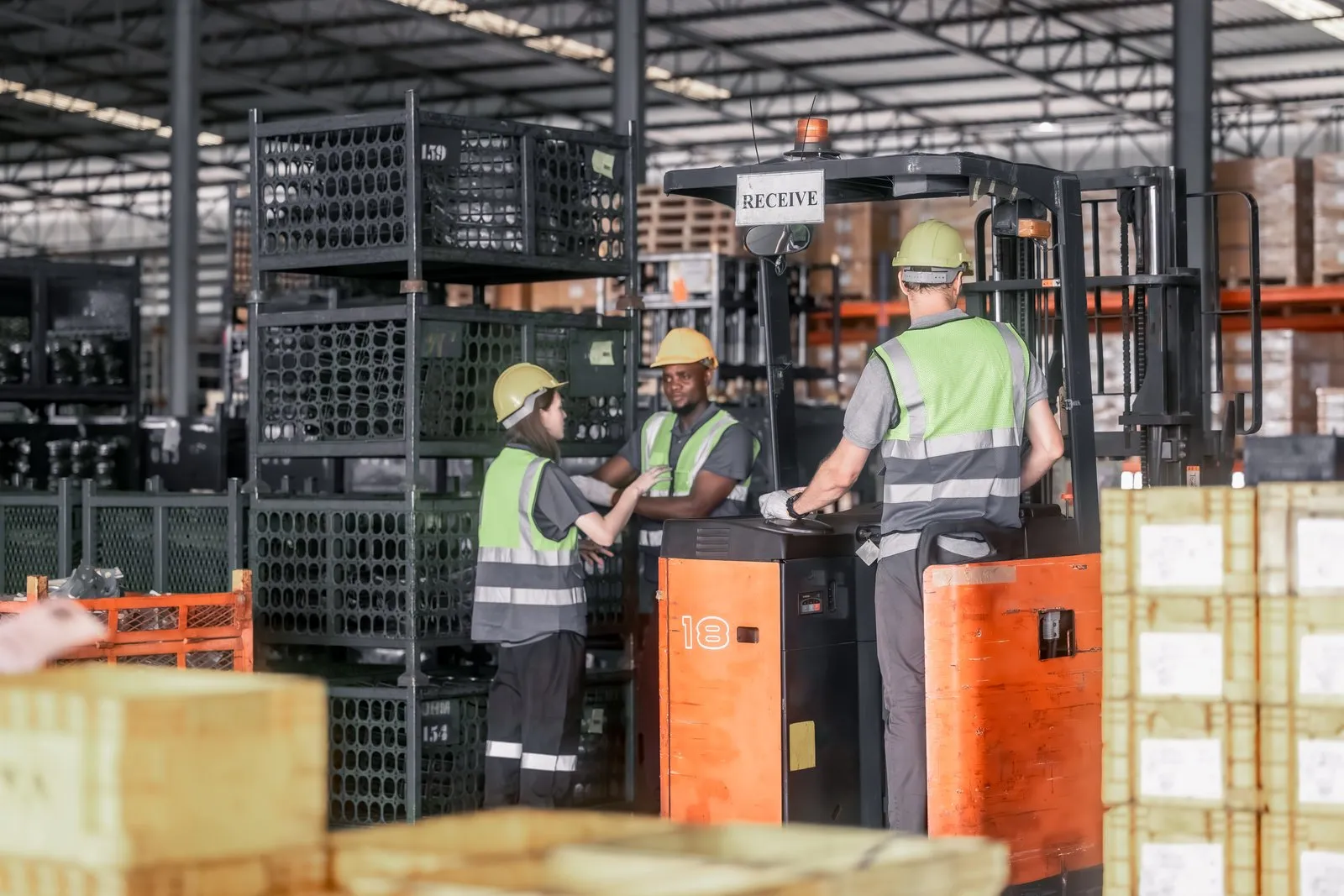
It is the second week of December. The distribution centre has added a night shift, the racking aisles are full, and a third of the people on the floor started in the last fortnight through a labour hire agency. The pick faces have been moved to make room for seasonal lines, so the walkways painted in June no longer match the way people actually move.
Nobody has changed the traffic management plan, and the new pickers do not yet know which corners the reach trucks come round fast. This is peak season warehouse safety in New South Wales, and it is predictable every year.
The problem: peak season puts more people in front of more forklifts
Forklift risk in NSW is already high outside peak season. In October 2025 the NSW Government reported that more than 600 forklift incidents had been notified to SafeWork NSW since January 2024. Four were fatal, and two thirds were dangerous incidents where nobody was hurt but someone could have been. Seventy per cent occurred in manufacturing, postal, transport and warehousing.
SafeWork NSW names the three main ways workers are killed or seriously injured: being hit or crushed by a forklift, being hit or crushed by its load, and being crushed in a tip-over. The people most at risk are those walking nearby, picking stock from a nearby shelf, stepping into the forklift’s path or helping with loading. That describes a seasonal picker almost exactly.
Pedestrian-operated trucks matter too. In an incident on 19 April 2026, a NSW warehouse worker’s foot was crushed under the skirt of a walkie reach stacker that was turning while travelling in reverse. SafeWork NSW’s response calls for training on the specific truck type, a traffic management plan, verified PPE use, and systems of work that allow suitable time to complete work safely. Peak season strains every one of those.
The requirement: review the plan when the work changes
Forklifts are powered mobile plant under the NSW Work Health and Safety Regulation 2025, and SafeWork NSW lists forklifts and mobile plant as a regulatory priority for 2026 to 2027, so inspectors will look at them on site visits. The minimum standard is set by the Code of Practice: Managing the risks of plant in the workplace, which businesses must follow or match with an equivalent or higher standard.
SafeWork NSW’s forklift guidance is specific about peak conditions. It says to review traffic management and other controls before changes to the workplace layout, plant, loads or work activities, and after an incident, near miss, fault or worker feedback. It asks businesses to physically separate people and forklifts where possible, enforce speed limits, and consider proximity sensors and speed-limiting devices.
For labour hire, SafeWork NSW says the host business must provide a workplace-specific induction, make sure workers understand and can demonstrate their instructions, supervise them through a competent person, and never ask them to drive a forklift without the right high risk work licence. The host and agency must coordinate on hazards, controls and role changes.
Why existing controls leave a gap in December
Most warehouse controls were designed for a normal week. Walkways and signs depend on people knowing them, and new starters do not. Inductions get compressed, supervisors are stretched across more shifts, and seasonal layouts create blind corners the plan never assessed.
The biggest gap is visibility. Peak season close calls are rarely reported because nobody was hurt and everyone was busy, so by January the evidence has gone.
The solution: how Flagman supports a peak season traffic management plan
Flagman is AI vision that detects people, vehicles and PPE in camera views and raises alerts when a person enters a defined zone. It processes video on site, with no cloud connection needed, and works with standard ONVIF IP cameras, so it can often use cameras a site already has.
- Forklift pedestrian detection: in Perleybrook Labs’ standard forklift setup, Flagman gives a warning at about 2.5 metres and a critical alert at about 1.5 metres. Where a forklift’s controls accept an external signal, mainly on electric trucks, it can send a slow or stop signal.
- Pedestrian exclusion zones: zones can be drawn around the areas peak season makes busy, such as temporary marshalling lanes, dock aprons, aisle ends and replenishment points. A person entering while a forklift is active triggers a light, siren or relay output.
- PPE detection: Flagman can flag missing high-visibility clothing in forklift areas, which supports the PPE verification SafeWork NSW asks for, without identifying individuals.
- Time-stamped event records: every alert is logged with a short video clip on a central dashboard, so close calls become data rather than stories.
Read how this applies at the dock in our loading dock safety guide, and how to tune zones so tired crews keep trusting alerts in our article on alert fatigue.
Predictive maintenance: worn forklifts make peak season worse
Peak season adds hours to every truck. Brakes, tyres, mast chains, horns, lights and seatbelts wear faster, and a forklift that is borrowed between shifts may skip its pre-start check. SafeWork NSW expects pre-start checks at the start of each shift and whenever an operator changes forklifts, faults to be recorded, and any truck with a fault that affects safe operation to be removed from service.
Predictive maintenance uses equipment condition and usage data to service a truck before a failure, rather than after an incident. Sharktech Global builds Business Intelligence dashboards that bring maintenance records, downtime and safety data together, including Flagman events. A manager can then see whether near misses cluster around one truck, aisle or shift.
Limitations: what Flagman cannot do
- Flagman does not replace physical separation, a traffic management plan, licensing, induction or supervision. It strengthens them.
- It is not a certified safety function and has no published SIL or Performance Level rating. Slow or stop signals only work where the truck’s controls accept them.
- It cannot detect what its cameras cannot see. Racking, stacked stock and poor lighting create blind areas, so camera placement must be reviewed when peak layouts change.
- It does not monitor operator fatigue. Fatigue on extended shifts must be managed through rostering and supervision.
- New workers must be told about the cameras. NSW workplace surveillance law requires notice before camera monitoring starts, so build the timing into the peak season plan.
A practical peak season plan
- Six weeks out: walk the floor with health and safety representatives and redraw the traffic management plan for the peak layout, including temporary stock locations.
- Four weeks out: agree with each labour hire agency on licences, PPE, induction content and supervision ratios. Check every licence against the register.
- Three weeks out: set Flagman exclusion zones for the peak layout, test alert distances with operators, and give surveillance notice to all workers, including incoming labour hire staff.
- First day of each new starter: deliver a site-specific induction on the floor, show the exclusion zones and alerts, and ask them to demonstrate safe routes.
- Weekly through peak: review Flagman events by zone, shift and truck, and adjust walkways, speed limits or scheduling where close calls cluster.
- After peak: compare the season’s events with your baseline and record what to change before next year.
The outcome you can measure
A site that follows this plan can show, with its own data, how many people entered forklift zones each week, where, on which shift, and whether changes reduced those entries. It gains alerts at the point of risk, captured near misses, and a dated record of reviewing controls when the work changed. That is the evidence boards and SafeWork NSW inspectors look for.
Flagman in Australia: local delivery by Sharktech Global
Sharktech Global, based in Liverpool, New South Wales, is the exclusive Australian and New Zealand delivery partner for Perleybrook Labs. Sharktech assesses sites, installs and integrates Flagman with existing cameras and systems, and provides local business-hours support. Learn more about Sharktech’s services for warehouses.
Key takeaways
- Peak season changes layout, plant, loads and people, and SafeWork NSW expects the traffic management plan to be reviewed before those changes.
- Labour hire workers need a site-specific induction, supervision and verified licences from the host business.
- Flagman forklift pedestrian detection adds warnings and evidence on top of separation, not instead of it.
Next step
Request a Flagman safety assessment or call Sharktech Global on 0468 017 373.
Sources: NSW Government, forklift safety compliance blitz (10 October 2025); SafeWork NSW, Forklifts; SafeWork NSW, Warehouse worker’s foot crushed by skirt of pedestrian-operated lift truck (19 April 2026); SafeWork NSW, Host employer in a labour hire arrangement; SafeWork NSW, Code of Practice: Managing the risks of plant in the workplace.
This article is general information only and is not legal advice. Check current requirements with SafeWork NSW or a qualified adviser for your site.