Overhead Crane Line of Fire Risks in Newcastle Workshops: Safer Suspended Load Zones with Flagman
Overhead crane safety in Newcastle: a regulator incident study on a remote-controlled crane injury, and how Flagman AI safety cameras support suspended load exclusion zones.
In brief
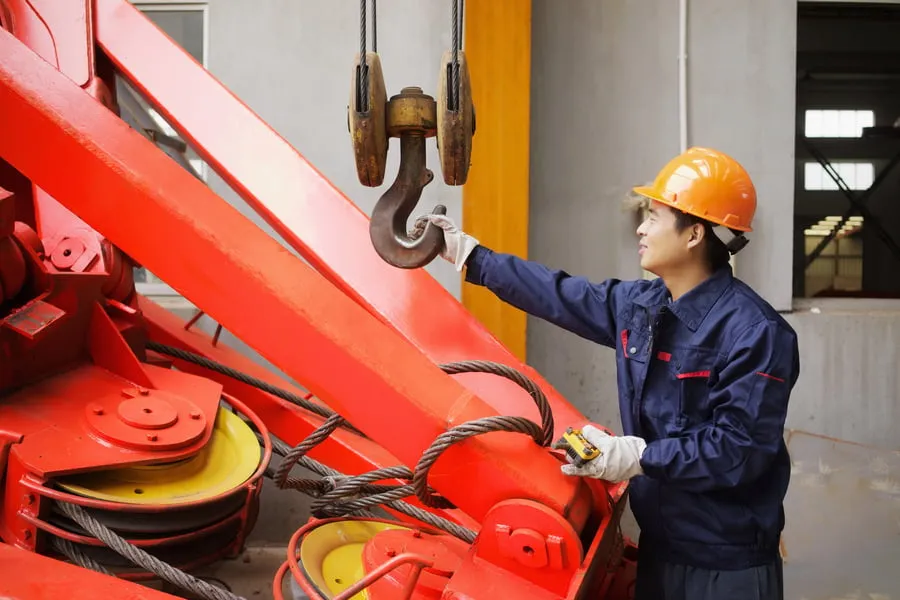
Overhead crane safety in Newcastle workshops depends on keeping people out of the path of suspended loads. Flagman AI safety cameras detect people under or near crane loads and log events on site. Sharktech Global delivers and supports Flagman in Australia as an added layer, not a replacement.
- Problem: Workers in fabrication shops and maintenance bays often guide loads by hand, close to the line of fire.
- Requirement: WHS compliance NSW expects lifts to be risk assessed and people kept out of the path of moving loads.
- Gap: Lone operators, remote pendants and unfamiliar crane modes leave little margin for error.
- Outcome: Better visibility of suspended load exclusion zone breaches, and data to improve lift planning.
Newcastle still builds and fixes heavy things. Fabrication shops in Mayfield and Beresfield, port maintenance bays and the workshops that service Hunter mining fleets all rely on overhead cranes to move plates, axles and assemblies.
Most lifts are routine. That is the risk. When a job feels familiar, people stand closer, reach in by hand and trust the crane to do what they expect. One mistimed button press can put a heavy load where a person is standing.
Newcastle’s industrial base
In 2022/23, manufacturing supported 8,508 local jobs (6.0%) and transport, postal and warehousing supported 7,366 jobs (5.2%) of the City of Newcastle’s 142,317 local jobs, according to economy.id. Many of these roles involve cranes, hoists and heavy components, from steel fabrication to port and fleet maintenance. Workshop crane safety across the Hunter is a daily concern for these workers, not a niche issue.
Incident study: a workshop crane safety lesson from the Hunter’s coal fleet
This is an incident study from a regulator report. Flagman was not involved.
On 13 November 2022, in the workshop of an open-cut coal mine near Gunnedah, NSW, a worker was removing a 32 kg steel lifting plate from the rear axle box of a rigid dump truck. The plate had been inserted through a cut-out smaller than the plate so the axle box could be lifted for repairs.
Working alone, he controlled an overhead crane with a cordless remote in one hand and handled the plate with the other. He crouched and reached through the cut-out to grip it. Uncomfortable, he let go and put the remote down to reposition. The crane kept moving. The plate snagged, pulled through and struck his lower left leg, causing a compound fracture.
The NSW Resources Regulator’s report, published in November 2024, found the crane had two modes. In slow mode the hook stopped when the button was released. In fast mode it would “run on”. The worker did not know about the two modes. The report found the lifting system was inherently unsafe because it needed a worker in the line of fire.
The Regulator said mine operators and contractors should:
- risk assess lifting and suspending loads, including load weight, shape, stability and environment
- identify line of fire, crush and manual handling hazards
- keep workers out of the path of moving loads and out of the line of fire
- use higher-order controls where practicable, such as a fixed lifting lug, lifting jacks or a hand winch
- train and supervise workers, and ensure only trained, authorised people operate lifting equipment.
The lesson carries straight into Newcastle fabrication shops, general workshops and port maintenance bays, where lone workers and remote-controlled cranes are common.
Where Flagman fits, and where it does not
We cover the broader topic in our guide to overhead crane safety and suspended load exclusion zones. For workshop lifts like this one, AI safety cameras in Newcastle could plausibly help by:
- Overhead crane human detection: Flagman detects people in camera video and can flag a person inside a defined suspended load exclusion zone under or around the hook.
- Warnings and signals: relay outputs can drive lights or sirens, and PLC integration over Modbus and PROFINET can send a slow or stop signal, only where the machine’s controls accept an external signal.
- Event logs: time-stamped video clips show how lifts are really done, which helps update risk assessments and safe work procedures.
- Leading indicators: repeated zone entries are near misses worth tracking, as explained in our post on near miss reporting and leading indicators.
- On-site processing: the Flagman Neo device is IP69K rated, fanless and processes video at the edge without cloud.
In this incident the worker was standing on the axle box and reaching through the cut-out by design. A camera alert would have told him what the task already required: being in the line of fire. Flagman cannot fix a lifting method that needs a person beside the load. The core fixes were a proper risk assessment, a higher-order lifting method such as a fixed lug, training on the crane’s modes and authorised operators only. Detection can only support those controls.
Limitations
- Flagman cannot make an unsafe lifting method safe or stop a crane’s run on unless the crane’s controls accept an external signal.
- It does not replace risk assessment, lift planning, competent operators, rigging inspection or mechanical crane safeguards.
- It is not certified for hazardous areas or underground coal, and holds no functional safety rating.
- Detection depends on line of sight, lighting and dust. A worker hidden inside or behind a component may not be visible.
- Consult workers and health and safety representatives before installing cameras.
- The NSW Workplace Surveillance Act 2005 requires written notice to workers before camera surveillance begins.
A practical plan for Newcastle sites
- List every regular lift in your workshop and check each has a current risk assessment.
- Find tasks that put a person beside or under the load, and look for higher-order fixes such as lugs, jacks or winches.
- Check every crane’s control modes, including any run on in fast mode, and train operators on them.
- Set up an authorisation register so only trained people use each crane.
- Ask Sharktech Global to assess camera coverage over crane bays and define suspended load exclusion zones.
- Consult workers, give written notice, then trial alerts and review event logs weekly.
Predictive maintenance: crane condition and load control
A crane that drifts, overruns or responds late turns a planned lift into an uncontrolled one. Worn brakes, pendant faults, damaged remotes and contactor problems all show up in maintenance records before they show up as incidents. Predictive maintenance in Newcastle workshops should treat crane controls and hoist brakes as safety items, not just uptime items.
Sharktech Global builds Business Intelligence dashboards that bring maintenance, downtime and safety data together, including Flagman events. Seeing crane faults and exclusion zone breaches side by side helps teams spot patterns and supports WHS compliance NSW reporting.
Flagman in Australia: delivered by Sharktech Global
Flagman Australia is delivered and supported by Sharktech Global, the exclusive Australian and New Zealand delivery partner for Perleybrook Labs, the developer of Flagman. Sharktech, based in Liverpool, New South Wales, assesses sites, installs and integrates Flagman with cameras and machine controls, and provides local business-hours support. See Sharktech’s manufacturing managed IT services.
The outcome you can measure
- Number of exclusion zone entries during lifts, tracked over time.
- Share of regular lifts with a current risk assessment and documented method.
- Crane fault and repair records linked to safety events, as part of predictive maintenance in Newcastle workshops.
- Number of operators trained and authorised for each crane.
Key takeaways
- Overhead crane safety in Newcastle starts with lift methods that keep people out of the line of fire.
- Know your crane’s modes. Fast mode run on caught a worker by surprise in this incident.
- AI safety cameras can flag people in suspended load zones and log events as evidence.
- Detection supports, and never replaces, risk assessment, higher-order controls and training.
Next step
Request a Flagman safety assessment for your Newcastle site, or call Sharktech Global on 0468 017 373.
Sources: NSW Resources Regulator, Investigation report: worker seriously injured during lifting activity (November 2024); economy.id, City of Newcastle employment by industry (2022/23). This article is general information only and is not legal advice.