Choosing a Pedestrian Detection System: An Australian Scorecard for Comparing AI Cameras, RFID and Radar
How to choose a pedestrian detection system for an Australian site: a ten-point scorecard comparing AI safety cameras, tag-based and radar proximity detection systems.
In brief
- The problem: vehicles were involved in 66 per cent of Australian worker deaths in 2024, and forklift and mobile plant interaction with pedestrians remains a leading cause of serious injury.
- The requirement: Australian work health and safety laws expect separation first, then engineering controls such as warning and proximity devices where people and powered mobile plant still meet.
- The challenge: tag-based, radar and AI camera systems work in very different ways, and choosing the wrong one wastes budget and erodes operator trust.
- The outcome: a simple ten-point scorecard helps Australian sites compare options on evidence, then trial Flagman AI detection against measurable criteria.
A distribution centre manager in western Sydney receives three quotes for pedestrian detection in the same week. One relies on tags worn by every worker. One uses radar on the back of each forklift. One uses AI safety cameras. Each brochure promises fewer collisions. None of them compares like with like.
That is the reality for many Australian operations managers and safety teams. The technology has moved quickly, but buying guidance has not kept up. This article sets out how to choose a pedestrian detection system using criteria that matter on an Australian site: the law, your hazards, your people and the evidence you will need afterwards.
The problem: people and mobile plant still meet every shift
Safe Work Australia reports that 188 workers died from traumatic injuries at work in 2024. At least one vehicle was directly involved in 66 per cent of those deaths (124 workers). Across all industries there were 146,700 serious workers’ compensation claims in 2023 to 2024, based on preliminary data.
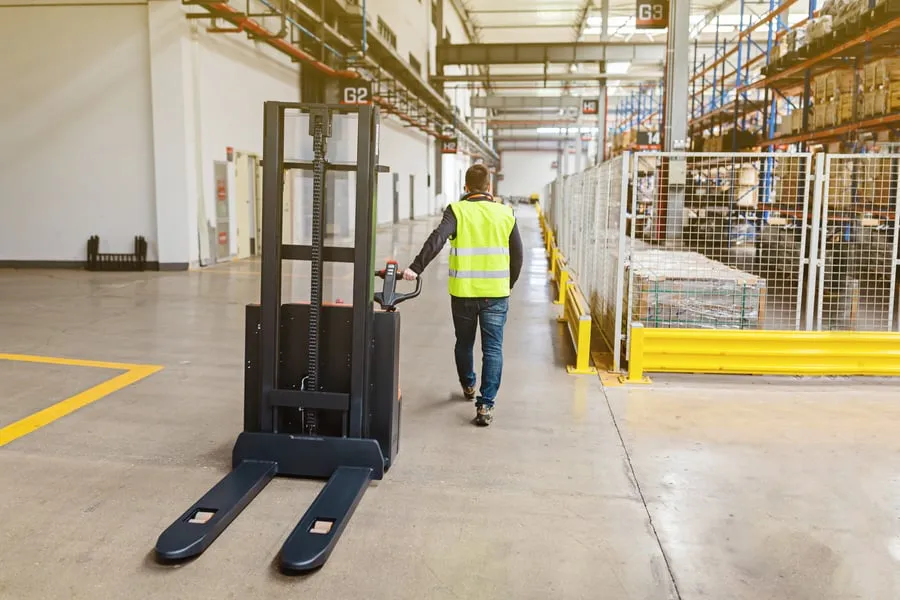
Forklifts are a persistent part of that picture. WorkSafe Victoria reports that eight people have died in forklift-related incidents in Victoria since 2019, including three pedestrians. In a single year, pedestrians accounted for 65 of 157 accepted forklift injury claims. More than one Victorian worker is seriously injured every week after being struck by a forklift or a falling load.
The same pattern applies in mining, manufacturing and warehousing. Wherever people walk near moving plant, a moment of distraction or a blind spot can end in serious harm.
The requirement: what Australian regulators expect
Safe Work Australia’s traffic management guide for warehousing is clear that a duty holder must not allow powered mobile plant to collide with a pedestrian. Where a collision is possible, the plant must have a device to warn people at risk from its movement. The guide lists engineering controls including interlocked gates, zoning systems, proximity alarms and speed shields.
The hierarchy of controls still comes first. Separating vehicles and pedestrians, for example with overhead walkways, barriers and pedestrian exclusion zones, should be considered before anything else. WorkSafe Victoria’s forklift guidance makes the same point, and also encourages employers to consider proximity devices that detect pedestrians and automatically slow mobile plant.
In mining, expectations are higher again. The NSW Resources Regulator’s guideline MDG 2007 sets out how mines should select and implement collision management systems. Its 2022 compliance report on proximity awareness and collision avoidance reviewed 29 surface coal operations and found most still relied mainly on procedural controls such as speed limits, traffic rules and radio communication. Western Australia’s new code of practice for road and traffic management at mines, published on 4 August 2026, adds further focus on vehicle and pedestrian separation. We covered that code in detail in WA Mines Must Now Consider Collision Avoidance.
Why buying decisions go wrong
Most failed proximity detection projects share the same causes:
- Technology chosen before the hazard is defined. A system built for haul trucks will not suit a narrow-aisle warehouse, and the reverse is also true.
- Nuisance alerts. When a system alarms constantly, operators stop listening. Alert fatigue quietly turns an engineering control back into an administrative one.
- No workforce consultation. Operators and pedestrians must understand and trust the system. The NSW Resources Regulator specifically recommends consulting the workforce so systems are effective and do not distract operators.
- No evidence trail. If the system cannot show what happened and when, it cannot support investigations, near miss reporting or reporting to boards.
The scorecard: how to choose a pedestrian detection system
Score each option from one to five against these ten criteria. Weight the first four most heavily, because they decide whether the system actually reduces risk on your site.
- Hazard fit. Does the system cover your actual interactions: forklifts and pedestrians, light and heavy vehicles, cranes, conveyors or restricted zones?
- Detection method. Tag-based systems only detect people wearing a working tag, so visitors and contractors without one are invisible. Radar and ultrasonic sensors detect objects but often cannot tell a person from a pallet or a pole. AI safety cameras classify people specifically, but need line of sight and suitable lighting.
- Nuisance alert performance. Ask how the system separates real risk from routine movement, and test it on your floor at peak times.
- Machine response. Can it send a slow or stop signal to the plant, or does it only warn? Confirm which of your machines can accept an external signal.
- Coverage and blind spots. Map the zones the system protects, including reversing, corners, racking ends and loading docks.
- Environment. Dust, washdown, heat, cold stores and low light all affect performance. Check ingress and temperature ratings.
- Data and privacy. Where is video processed and stored? Does the deployment meet your state’s workplace surveillance law? Our guide to using AI safety cameras without privacy risk covers the obligations.
- Evidence and reporting. Does it produce time-stamped event logs and video that support near miss reporting and leading safety indicators?
- Integration. Can it connect to programmable logic controllers, relays and existing cameras, or does it need a closed hardware ecosystem?
- Local support. Who installs, configures, trains and maintains it in Australia, and how quickly can they attend site?
The solution: how Flagman AI detection scores against the criteria
Flagman is an AI vision platform built to strengthen existing controls in manufacturing, mining and warehousing. For forklift pedestrian detection and other mobile plant safety applications, it works as follows:
- Detects people, not tags. Flagman’s computer vision recognises people, vehicles and personal protective equipment, so visitors and contractors are detected without carrying a device.
- Layered alerts. A typical forklift setup gives a warning at about 2.5 metres and a critical alert at about 1.5 metres, which can be tuned to each site to reduce nuisance alerts.
- Machine response where controls allow. Flagman can send a slow or stop signal through relay outputs or programmable logic controller integration over Modbus and PROFINET, where the machine’s controls accept an external signal.
- Edge processing. Video is processed on site, with no reliance on cloud or internet connectivity, which supports privacy and uptime.
- Works with your cameras. Flagman supports ONVIF IP, USB and GMSL cameras, so some sites can extend existing CCTV rather than replacing it.
- Evidence built in. Every event is logged with time-stamped video in a central dashboard, turning close calls into data.
- Beyond pedestrians. The same platform covers machine guarding, hand and finger zones, conveyors, overhead cranes, PPE, fire and smoke, people counting and access control.
Flagman in Australia: local delivery by Sharktech Global
Sharktech Global is an Australian technology company based in Liverpool, New South Wales, and the exclusive Australian and New Zealand delivery partner for Perleybrook Labs, the developer of Flagman. Sharktech assesses sites, installs and integrates Flagman with cameras and machine controls, and provides local business-hours support. It is currently onboarding founding sites in New South Wales.
A Flagman project with Sharktech starts with a site assessment of pedestrian and mobile plant interactions and existing cameras, followed by a written, costed plan before any commitment. Because safety technology depends on the systems around it, Sharktech also provides managed IT, Essential Eight cybersecurity assessments and Business Intelligence dashboards that report Flagman safety events alongside warehouse, production and maintenance data.
Industry detail is available for warehouse safety and managed IT, manufacturing machine safety and managed IT and mining safety and managed IT.
Limitations: what Flagman does not replace
Flagman is detection and early warning. It does not replace separation, physical barriers, guarding, isolation, traffic management plans or certified collision avoidance systems on mine haul trucks. It does not hold a published safety integrity level or performance level rating, and it is not certified for hazardous areas or underground coal. Camera-based detection depends on line of sight, so camera placement and lighting must be assessed for every zone. Any deployment should be supported by a risk assessment, consultation with workers and regular verification that the control is working.
A practical selection plan
- Map every point where people and mobile plant interact, using incident and near miss records.
- Apply the hierarchy of controls and fix what separation and barriers can fix first.
- Define what success looks like before you speak to vendors.
- Score at least two technology types with the ten-point scorecard.
- Consult operators, pedestrians and health and safety representatives.
- Run a time-boxed trial in your highest-risk zone with agreed measures.
- Review results, tune alert zones and decide on rollout.
For a step-by-step traffic plan that pairs separation with detection, see Forklifts and Pedestrians Sharing the Floor.
The outcome you can measure
- Alerts delivered at the point of risk, to both operators and pedestrians.
- Near misses captured automatically instead of going unreported.
- A baseline of interactions per shift, zone and vehicle, compared month by month.
- Time-stamped evidence for investigations, boards and regulators.
- A documented, defensible decision on why your site chose its proximity detection system.
Key takeaways
- Australian law expects separation first, then warning and proximity devices where people and plant still meet.
- Tag-based, radar and AI camera systems detect different things. Choose by hazard, not brochure.
- Nuisance alerts and lack of consultation are the most common reasons systems fail.
- A scored, trialled decision protects workers and stands up to scrutiny.
Next step
Request a Flagman safety assessment to map your site’s pedestrian and mobile plant interactions and score your options, or call Sharktech Global on 0468 017 373.
In Australia, Flagman is delivered and supported locally by Sharktech Global.
Sources: Safe Work Australia, Key Work Health and Safety Statistics Australia 2025; WorkSafe Victoria, forklift guidance and inspections (May 2024); Safe Work Australia, Traffic Management: Guide for Warehousing; NSW Resources Regulator, MDG 2007; NSW Resources Regulator, Proximity Awareness and Collision Avoidance compliance report (2022); Government of Western Australia, new mine road and traffic code (August 2026). This article is general information only and is not legal advice. Obtain advice for your site and jurisdiction.